Guides
What Does Beeswax Smell Like? Understanding Its Natural Aroma
What does natural beeswax really smell like? Discover where its subtle aroma comes from, why it can vary from batch to batch, and why pure beeswax doesn't always smell strongly of honey.
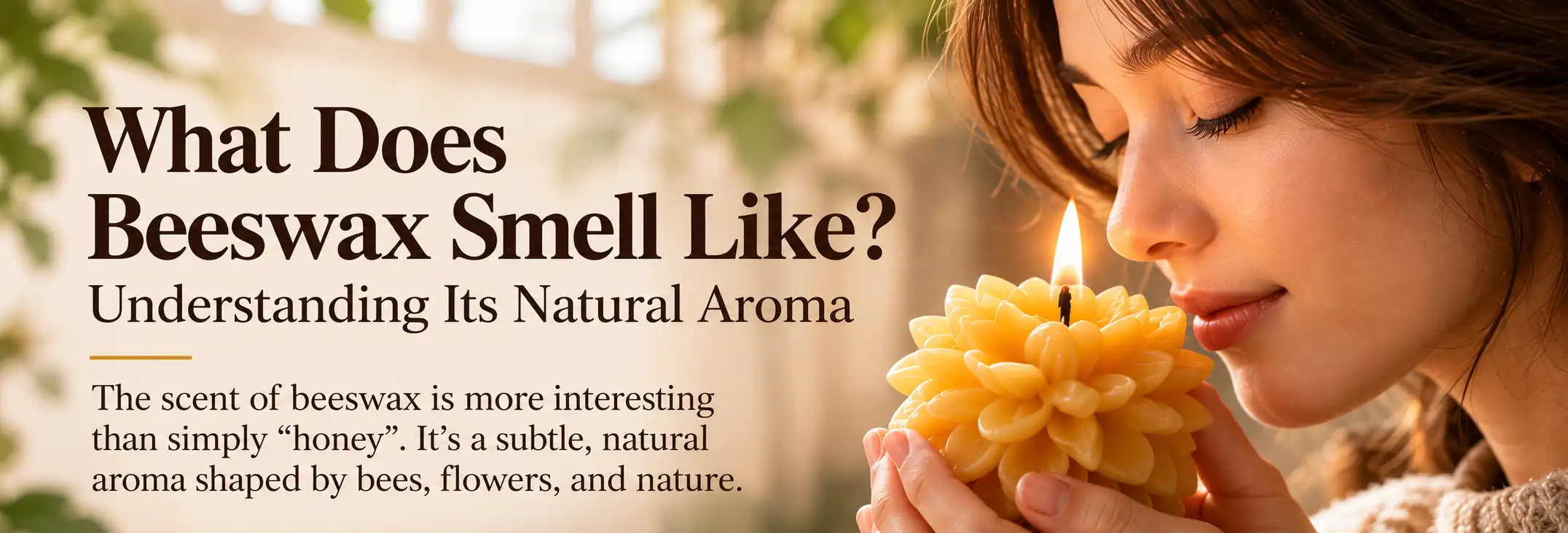
What Does Beeswax Smell Like? Understanding Its Natural Aroma
When you first pick up a natural beeswax candle, you may instinctively bring it closer and smell it.
Sometimes there is a gentle sweetness.
Sometimes the aroma feels warm, earthy, or reminiscent of honeycomb.
And sometimes it is so subtle that you need to hold the candle close to notice it at all.
This leads to a common question:
What is 100% pure beeswax actually supposed to smell like?
The answer is more interesting than simply “honey.”
Does Beeswax Naturally Have a Scent?
Yes. Natural beeswax can have its own subtle aroma.
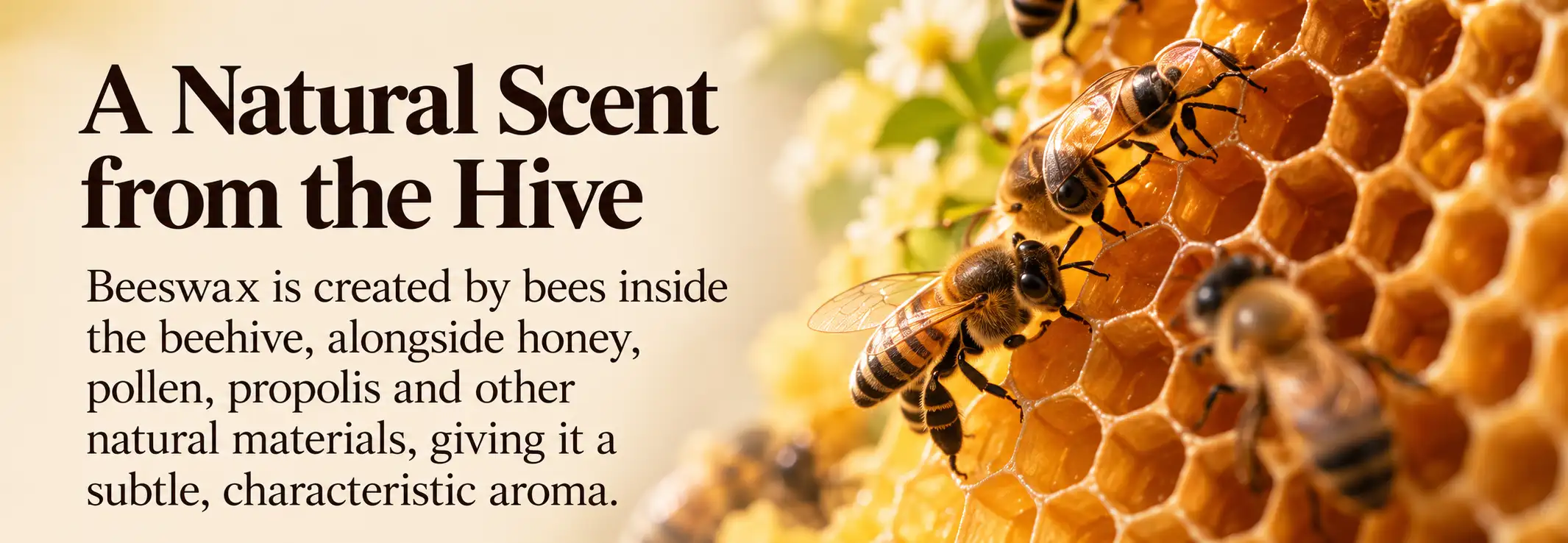
Beeswax begins inside the beehive, where worker bees produce wax and use it to build honeycomb.
During its time in the hive, the wax exists alongside honey, pollen, propolis, and other naturally occurring materials.
Because of this environment, beeswax can retain a characteristic aroma even after it has been collected and prepared for candle making.
But there is an important distinction:
the natural scent of beeswax is not the same as an added fragrance.
It is part of the material itself.
Does Pure Beeswax Smell Like Honey?
It can—but not always in the way people expect.
Natural beeswax is often described as having a soft honey-like aroma. But a beeswax candle should not necessarily smell like opening a jar of honey.
The aroma can be much more delicate.
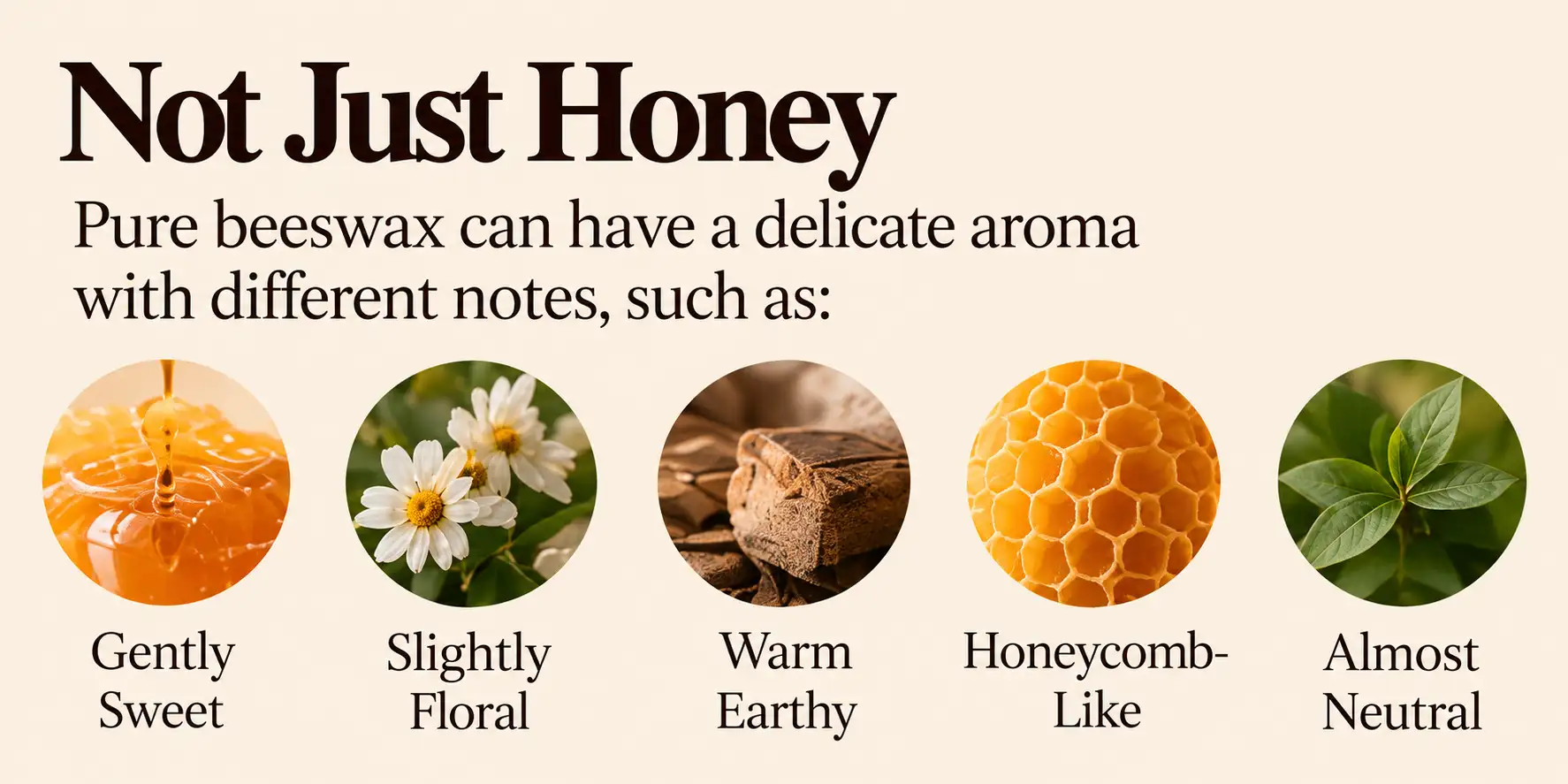
Depending on the wax, you might notice notes that seem:
gently sweet,
warm,
slightly floral,
earthy,
reminiscent of honeycomb,
or almost neutral.
These descriptions are subjective because people experience scent differently.
More importantly, beeswax itself varies.
That means there is no single aroma that every piece of pure beeswax must have.
Why Does the Aroma Vary?
Beeswax is a natural material rather than a standardized fragrance product.
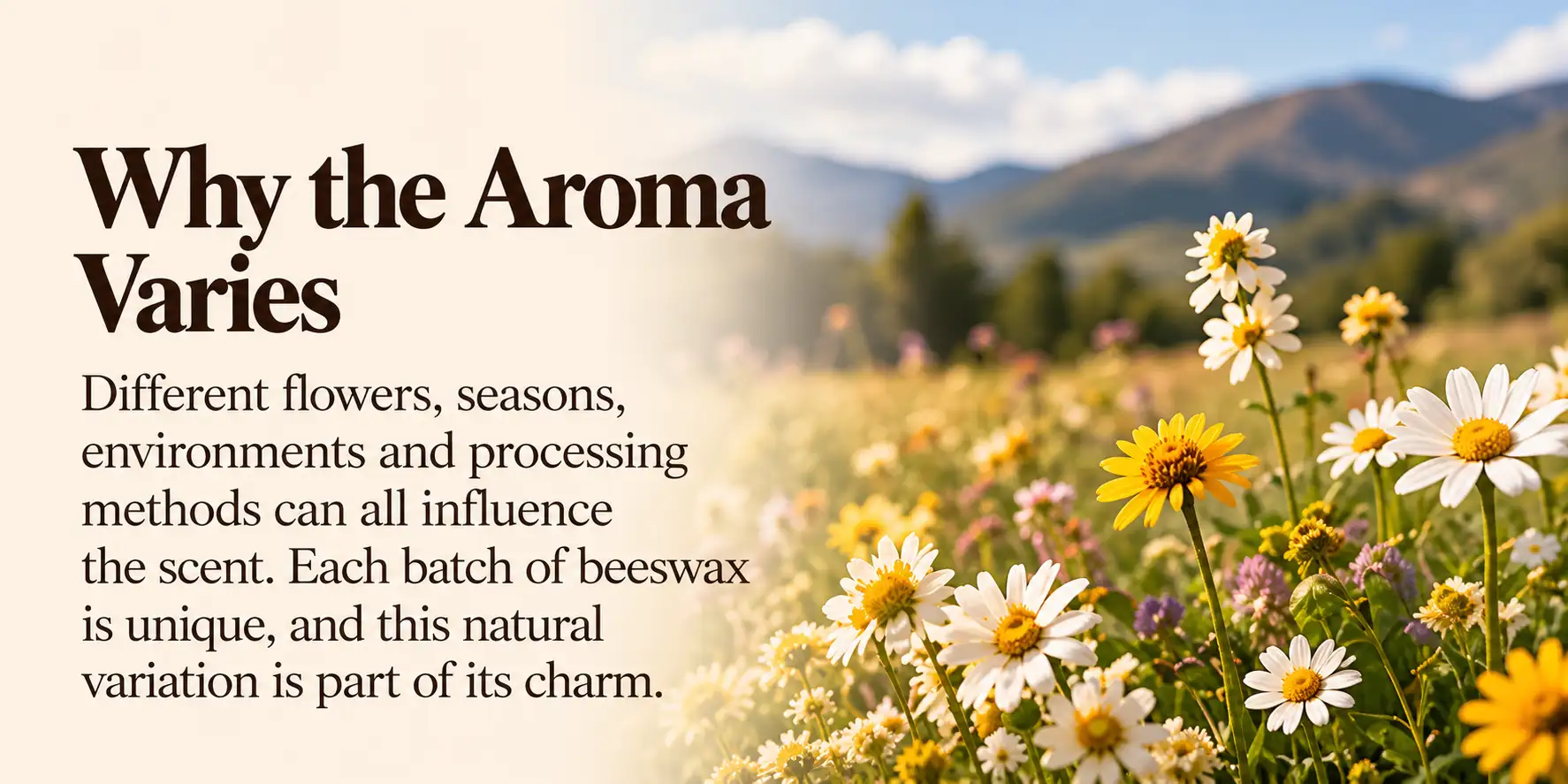
The environment surrounding the bees can change throughout the year.
Different plants bloom.
Different sources of nectar and pollen become available.
Honeycomb is used for different lengths of time.
The wax is collected, filtered, and prepared in different batches.
All of these factors can contribute to subtle differences in its appearance and aroma.
One batch may have a noticeable warm, honeycomb-like scent.
Another may be much milder.
That variation does not automatically mean something is wrong with either batch.
It is part of working with a material created by bees.
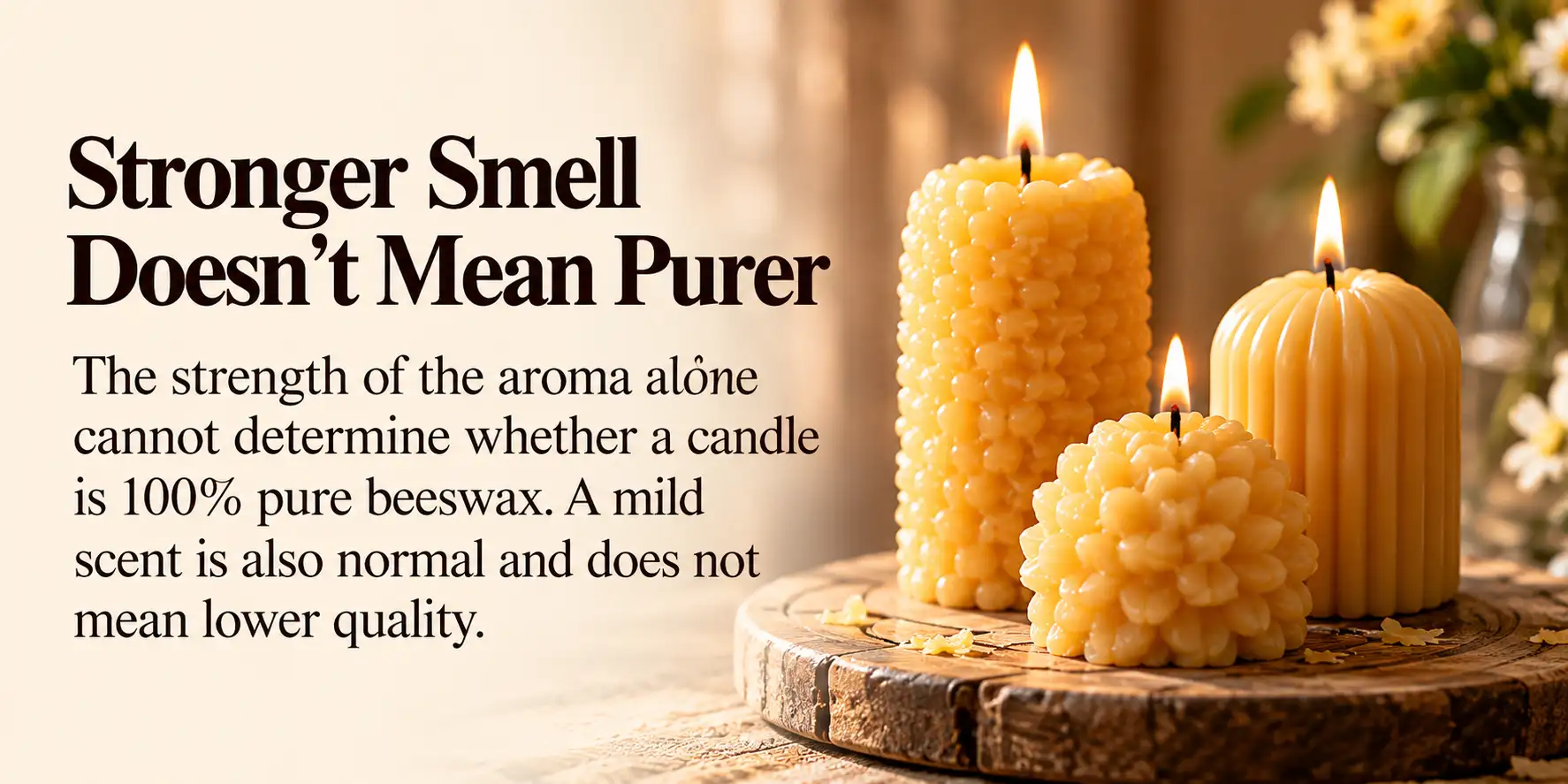
Does a Stronger Honey Smell Mean Purer Beeswax?
No.
This is an important misconception.
The strength of the aroma alone cannot tell you whether a candle is made from 100% pure beeswax.
A strongly scented candle is not automatically purer than a candle with a very subtle natural aroma.
Likewise, a mild-smelling beeswax candle is not automatically lower quality.
Scent intensity can vary naturally, and fragrance can also be added to candle products.
For that reason, smell should not be used as a purity test.
If you want to know what a candle is made from, look at the maker's ingredient or material information.
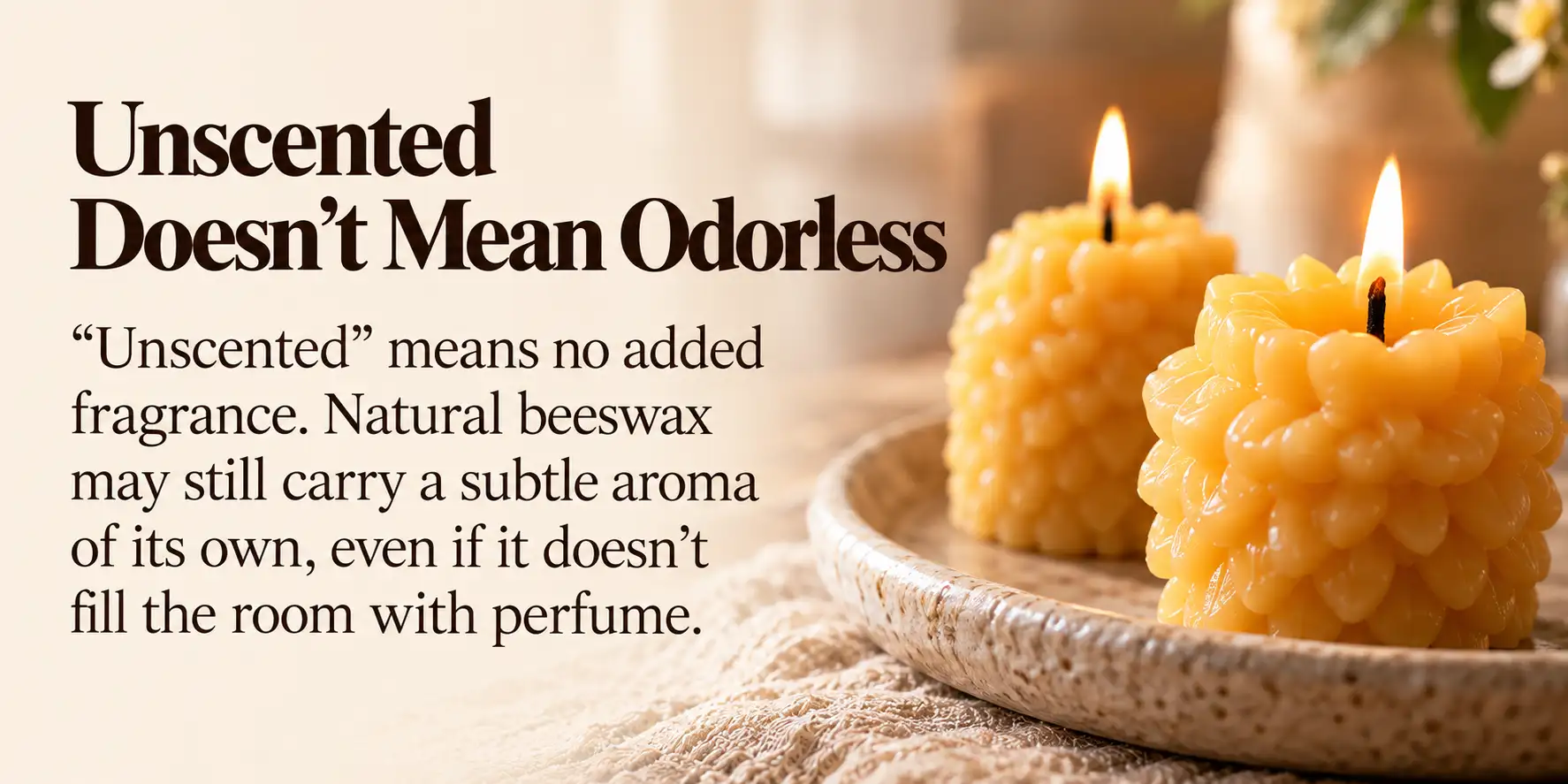
Unscented Doesn't Mean Odorless
Another useful distinction is the word “unscented.”
When a beeswax candle is described as unscented, it generally means that no fragrance has been intentionally added.
It does not necessarily mean that the candle has absolutely no smell.
A candle made from natural beeswax may still carry the subtle aroma of the wax itself.
For people accustomed to strongly fragranced candles, the difference can be surprising.
Natural beeswax does not need to fill a room with perfume in order to have character.
Sometimes its appeal is precisely the opposite: a quiet, understated aroma that stays close to the material.
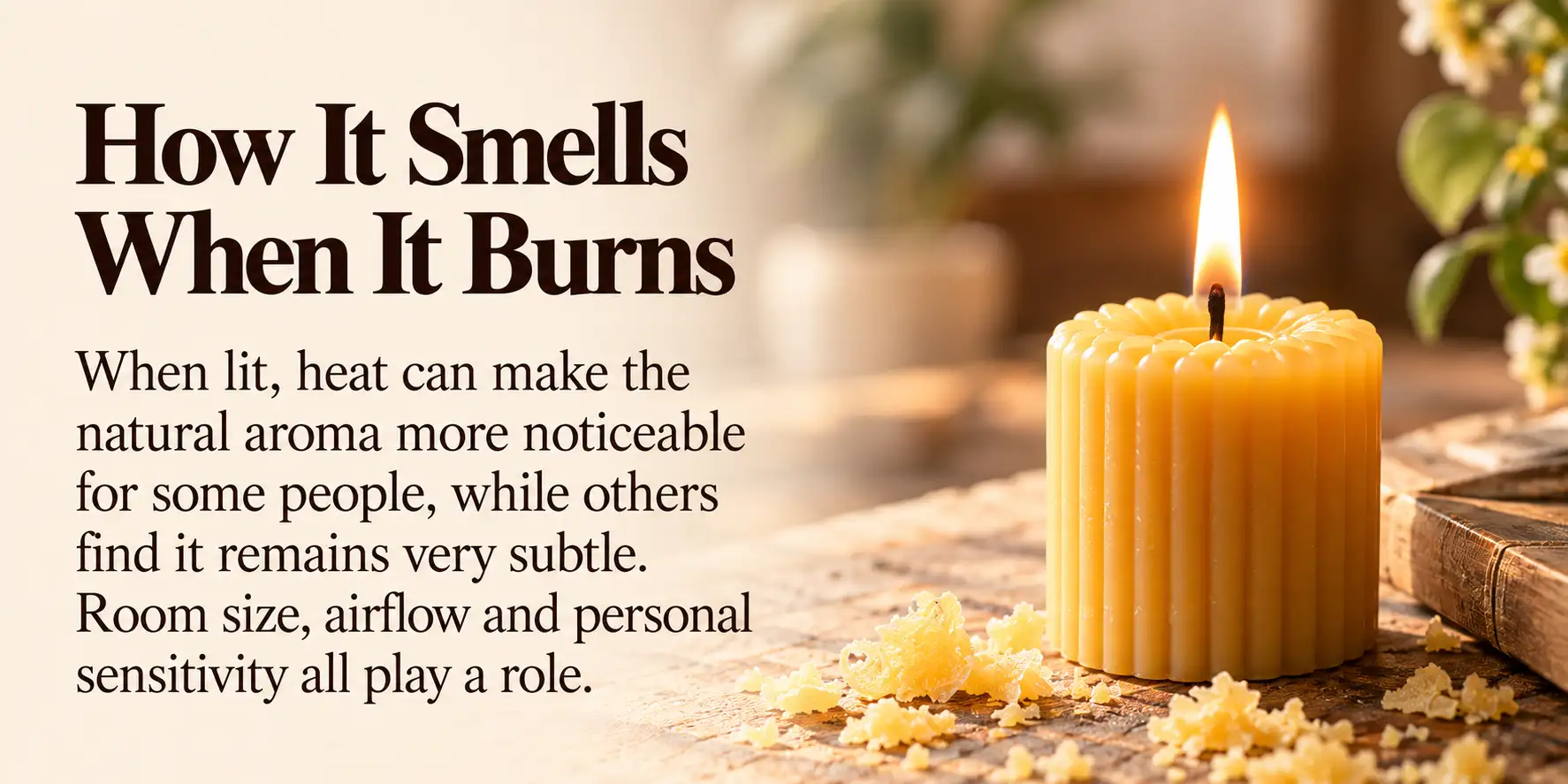
What Happens to the Aroma When the Candle Burns?
When a beeswax candle is lit, heat changes the way we experience it.
Some people notice the natural aroma more easily when the wax becomes warm. Others find it remains very subtle.
Room size, airflow, temperature, and individual sensitivity to scent can all influence the experience.
A natural beeswax candle should therefore not be treated like a scented candle designed specifically for fragrance throw.
Its primary purpose is light and flame.
The natural aroma is simply one of the characteristics of the wax.
Why HiveGlow Doesn't Try to Make Every Batch Smell Identical
Perfect consistency is easy to expect from modern products.
The same color.
The same texture.
The same scent.
Every time.
But beeswax begins in nature.
At HiveGlow, our candles are handcrafted from 100% pure beeswax, and we believe some natural variation belongs to the material.
One batch of wax may be slightly lighter or darker than another.
Its aroma may also be a little stronger or softer.
We don't believe natural beeswax needs to smell artificially identical from candle to candle simply to create the appearance of consistency.
Those subtle differences are reminders of where the material came from.
Can You Identify Pure Beeswax by Smell?
Not reliably.
Smell can be one clue that helps you experience the character of beeswax, but it should never be treated as definitive proof of purity.
The same applies to color, surface bloom, and texture.
No single visual or sensory characteristic can reliably confirm that a candle is made from 100% pure beeswax.
Transparency from the candle maker matters more.
At HiveGlow, we make our wax composition clear:
100% pure beeswax.
That's more meaningful than asking customers to perform homemade purity tests based on scent or appearance.
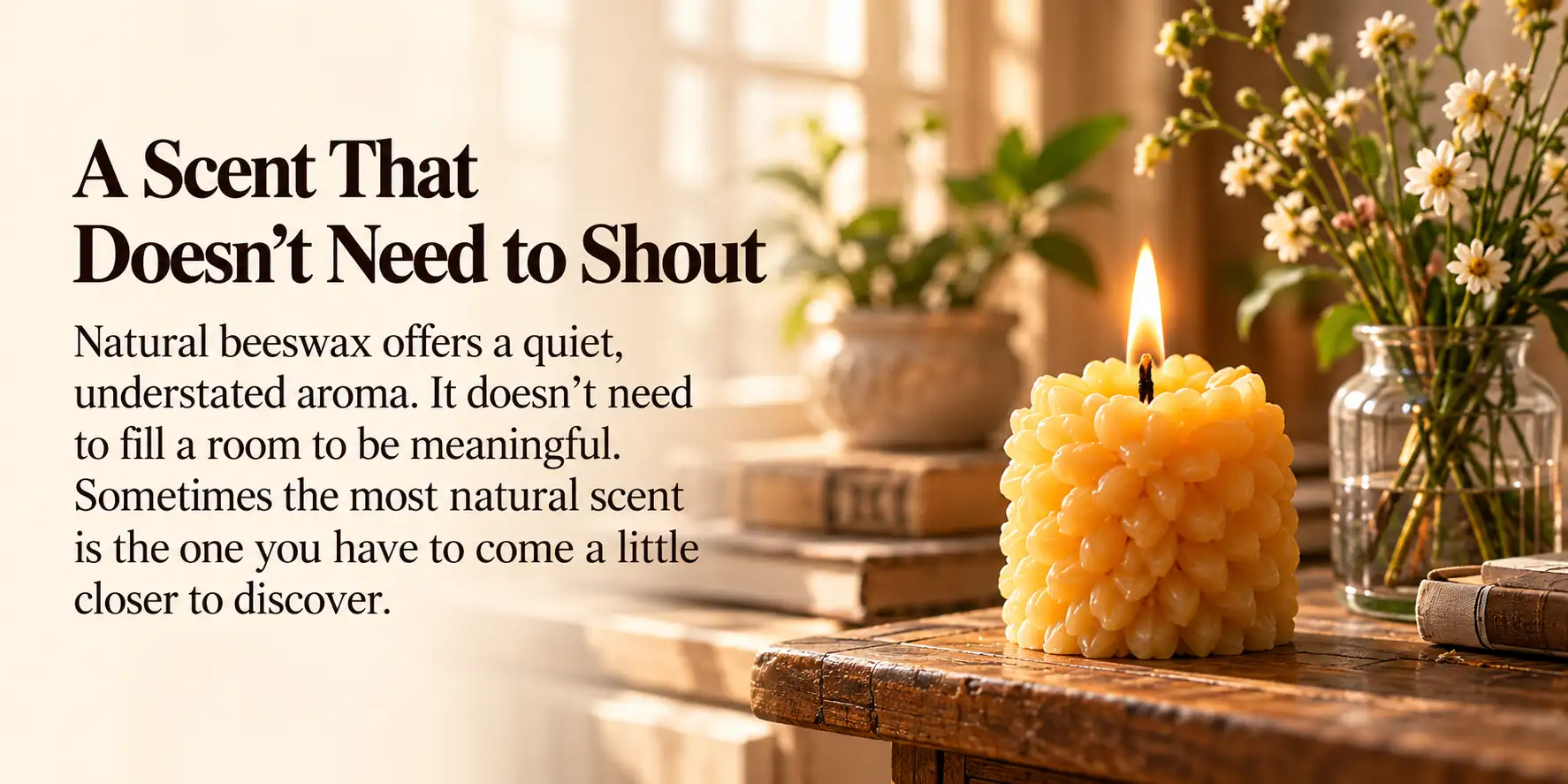
A Scent That Doesn't Need to Shout
Modern homes are filled with fragrance.
Perfumes, room sprays, diffusers, detergents, and scented candles can all be designed to make their presence immediately noticeable.
Natural beeswax offers something different.
Its aroma can be quiet.
Sometimes warm.
Sometimes gently sweet.
Sometimes barely there.
And that's perfectly normal.
For us, the beauty of beeswax is not about making nature stronger, sweeter, or more uniform than it really is.
It is about allowing the material to retain its own character.
From the hive to the finished candle, 100% pure beeswax carries a story that doesn't need added fragrance to be meaningful.
Sometimes the most natural scent is the one you have to come a little closer to discover.
Keep reading
How Long Do Beeswax Candles Burn? What Really Affects Burn Time
How long does a beeswax candle really burn? Explore the key factors that affect burn time, from candle size and wick choice to burning conditions and proper candle care.
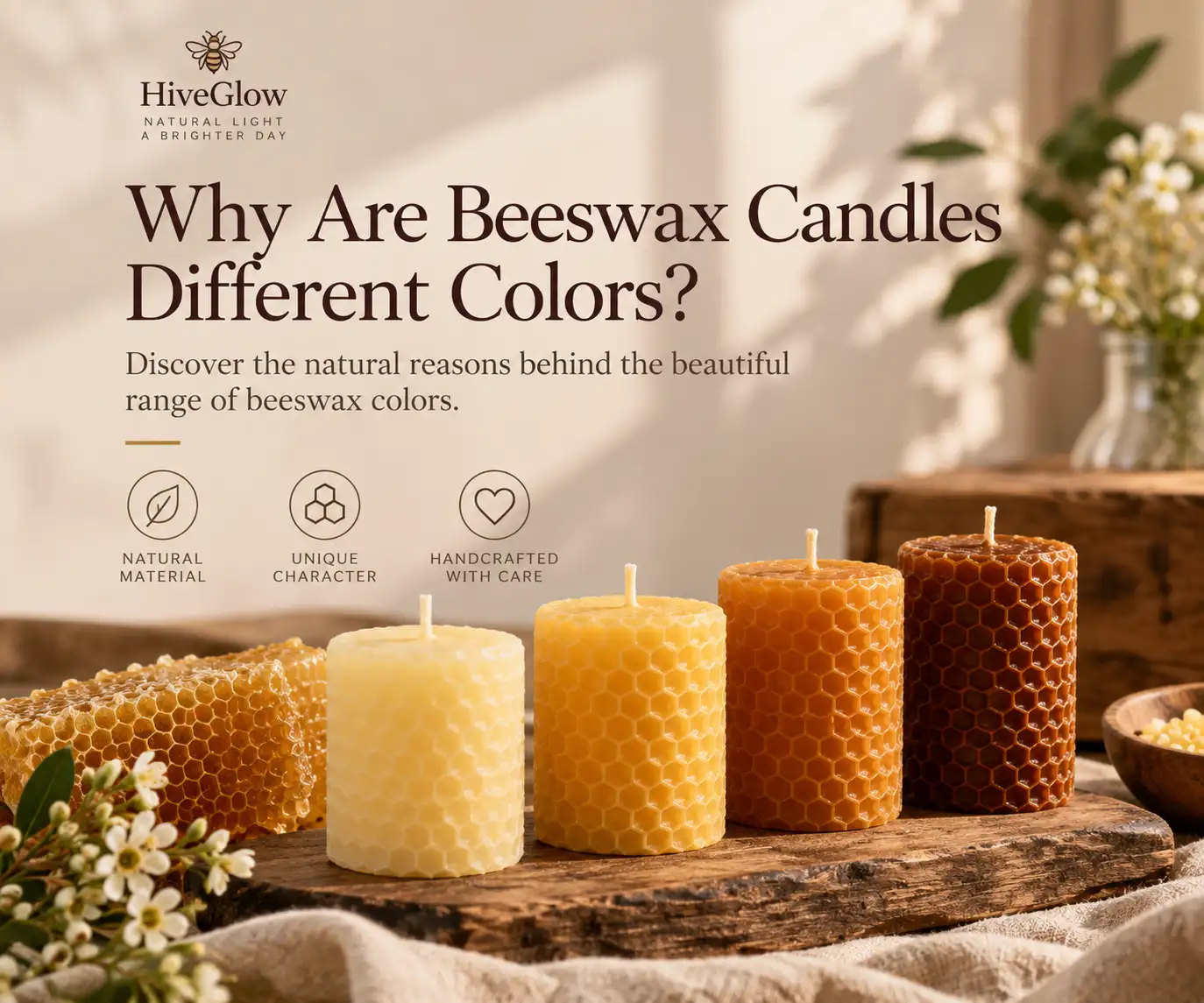
Why Are Beeswax Candles Different Colors?
Why do pure beeswax candles vary from pale yellow to deep golden amber? Discover what causes these natural color differences and why they are part of the unique character of 100% pure beeswax.
A Beginner's Guide to Beeswax Candles
New to beeswax candles? Learn about their natural color, aroma, bloom, burning behavior, storage, and the qualities that make pure beeswax unique.