Guides
Why Are Beeswax Candles Different Colors?
Why do pure beeswax candles vary from pale yellow to deep golden amber? Discover what causes these natural color differences and why they are part of the unique character of 100% pure beeswax.
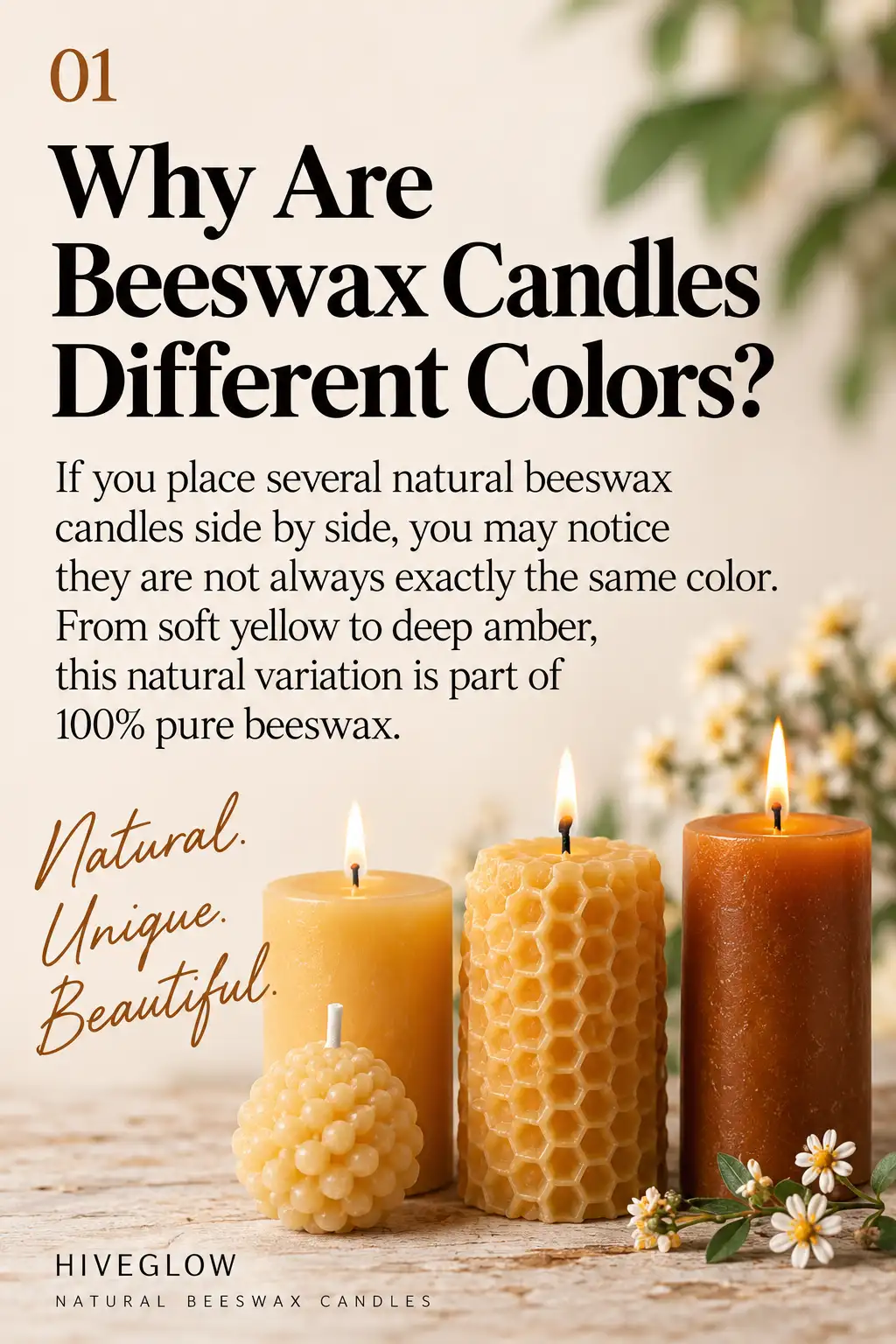
Why Are Beeswax Candles Different Colors?
If you place several natural beeswax candles side by side, you may notice something interesting: they are not always exactly the same color.
One candle may be a soft golden yellow, while another may appear deeper, warmer, or closer to amber.
For a mass-produced product, color differences might seem unusual. But with 100% pure beeswax, natural variation is part of the material itself.
So why does beeswax vary in color—and does a darker or lighter candle mean better quality?
Let’s take a closer look.
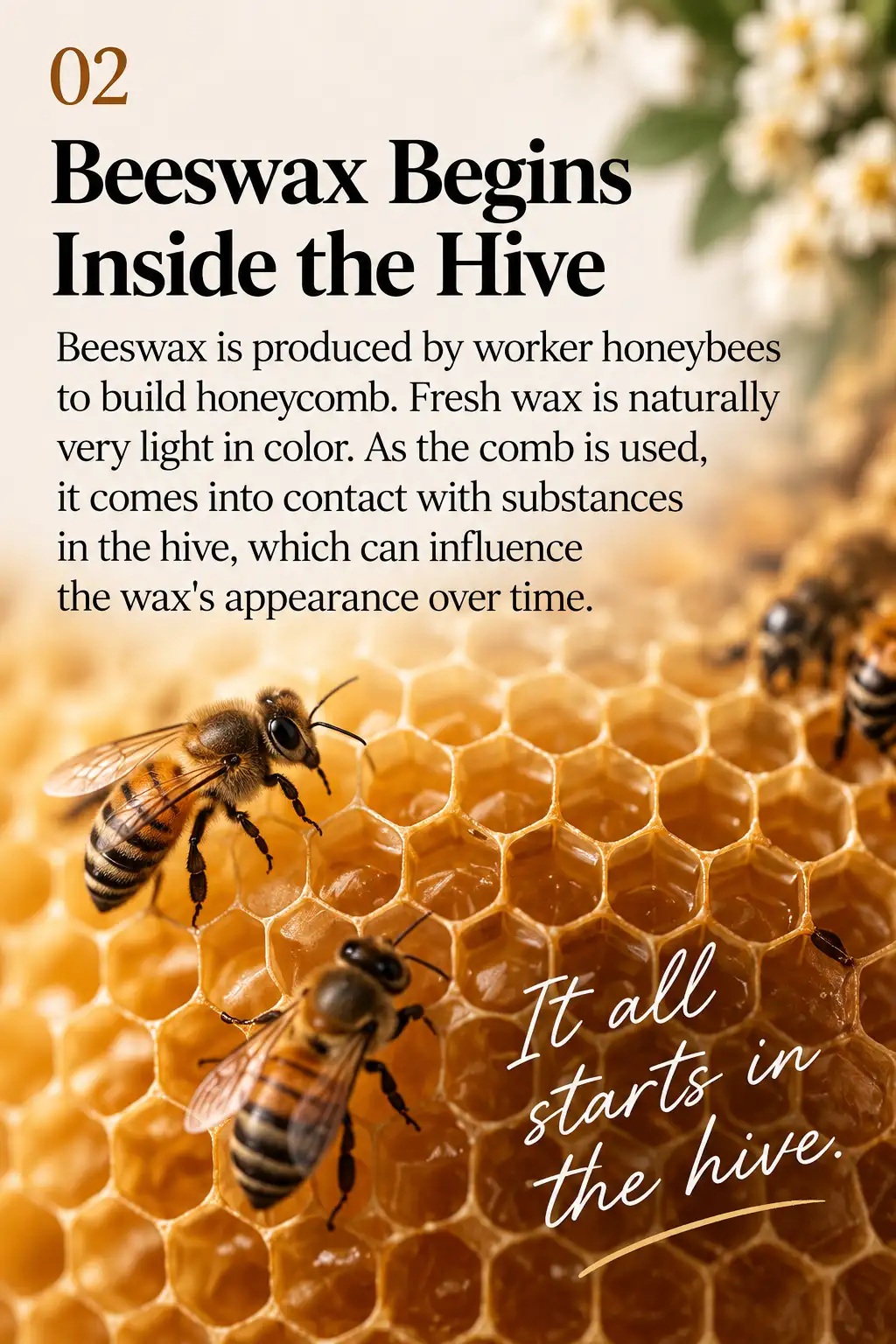
Beeswax Begins Inside the Hive
Beeswax is produced by worker honeybees and used to build the honeycomb structures inside the hive.
Fresh wax produced by bees is naturally very light in color. As the comb is used, however, it comes into contact with substances naturally present in the hive.
Over time, this can influence the appearance of the wax.
That means beeswax is not an industrial material manufactured to an identical color specification. It begins as part of a living, changing environment.
This is one reason natural beeswax can have such a distinctive character.
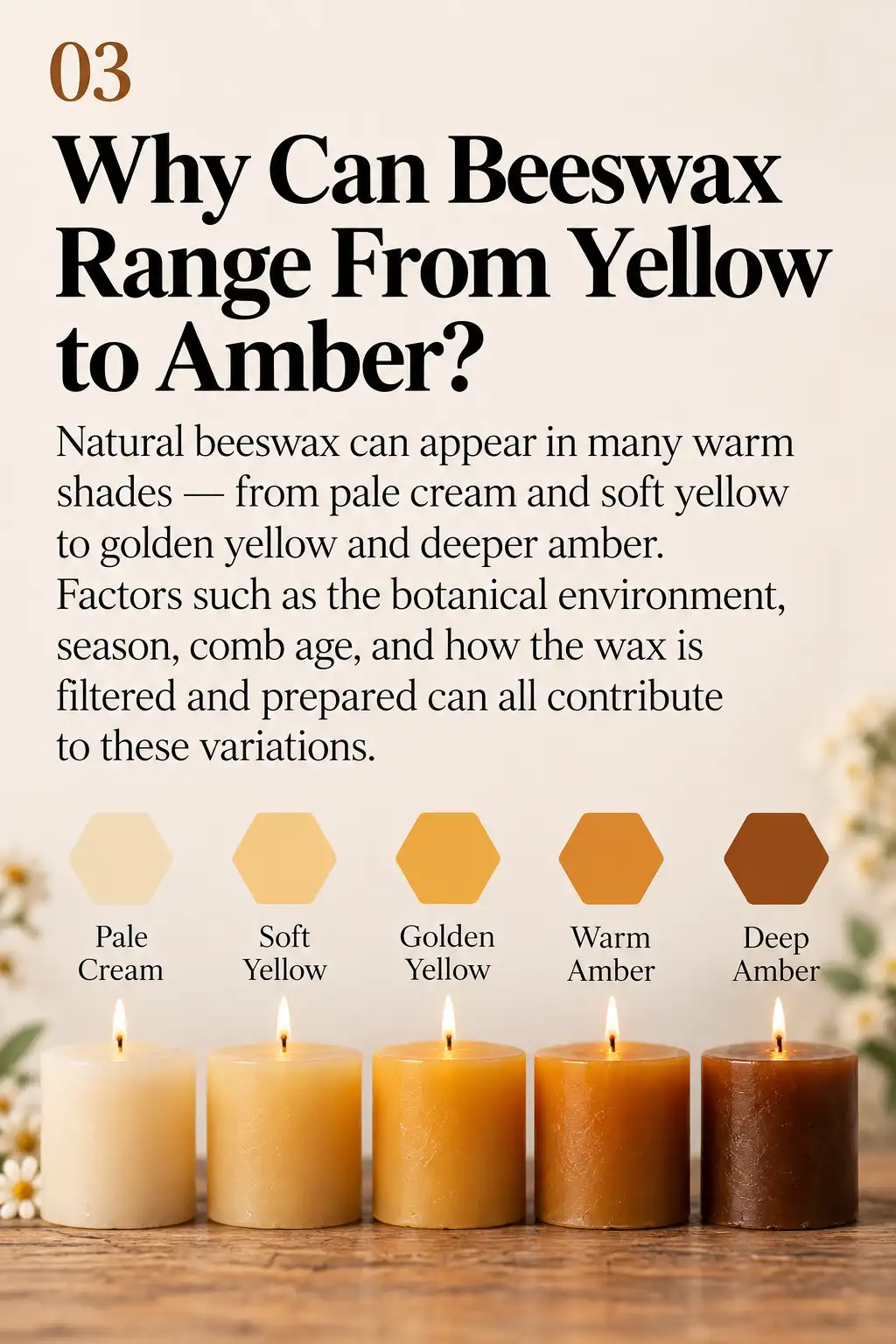
Why Can Beeswax Range From Yellow to Amber?
Natural beeswax can appear in many warm shades—from pale cream and soft yellow to golden yellow and deeper amber.
Several factors can contribute to these variations.
The botanical environment surrounding the bees can differ from one location or season to another. The condition and age of the comb can also influence the wax before it is collected and processed.
How the wax is filtered and prepared may affect its final appearance as well.
As a result, two batches of natural beeswax do not necessarily look identical.
For us, that isn't something that needs to be corrected.
It's part of what makes beeswax beeswax.
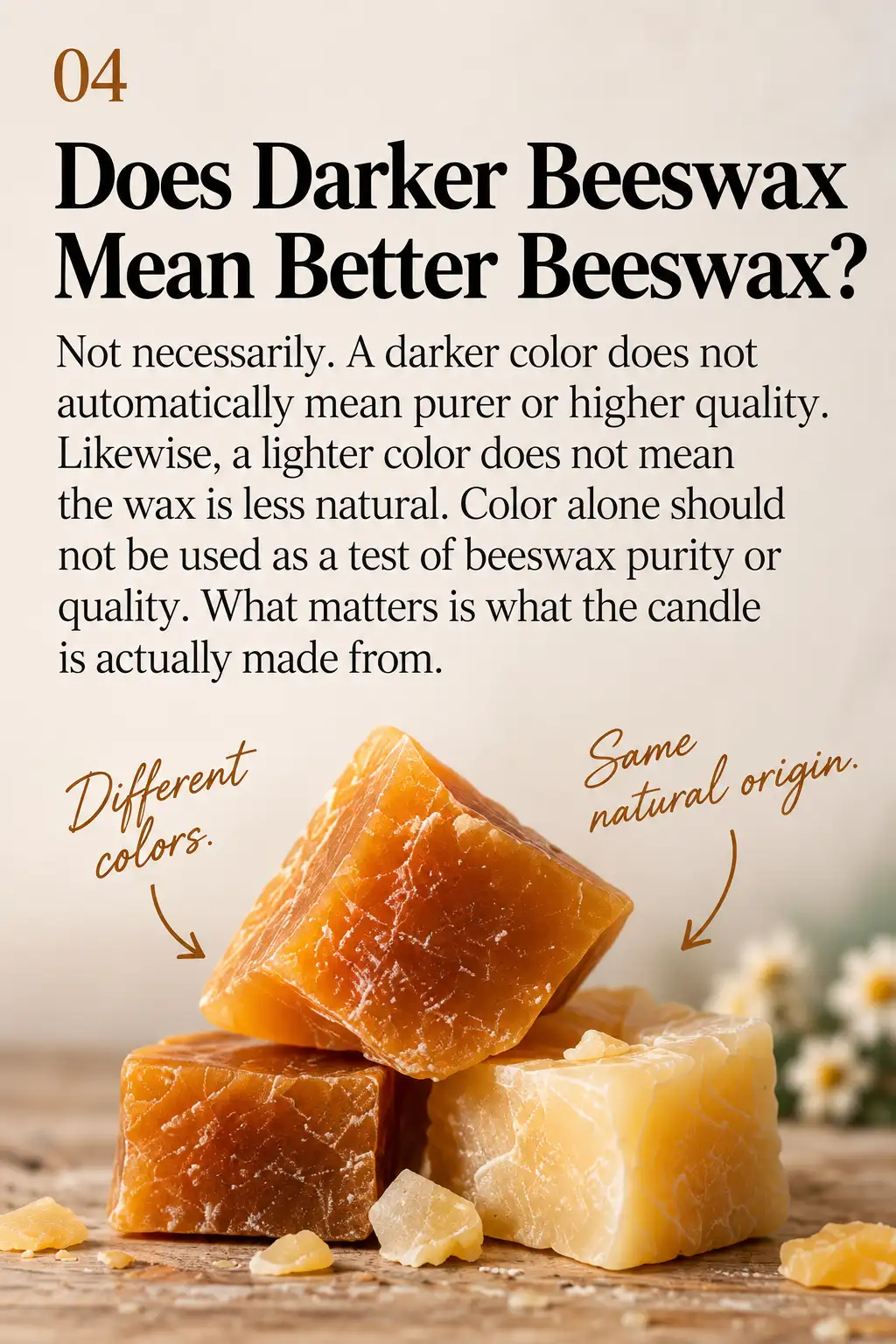
Does Darker Beeswax Mean Better Beeswax?
Not necessarily.
A darker golden color does not automatically mean the beeswax is purer, richer, or higher quality.
Likewise, a lighter color does not automatically mean the wax is less natural.
Color alone should not be used as a test of beeswax purity or quality.
Natural beeswax exists across a range of colors.
What matters much more is what the candle is actually made from.
At HiveGlow, our focus is simple: the wax in our candles is 100% pure beeswax, rather than beeswax diluted with other candle waxes.
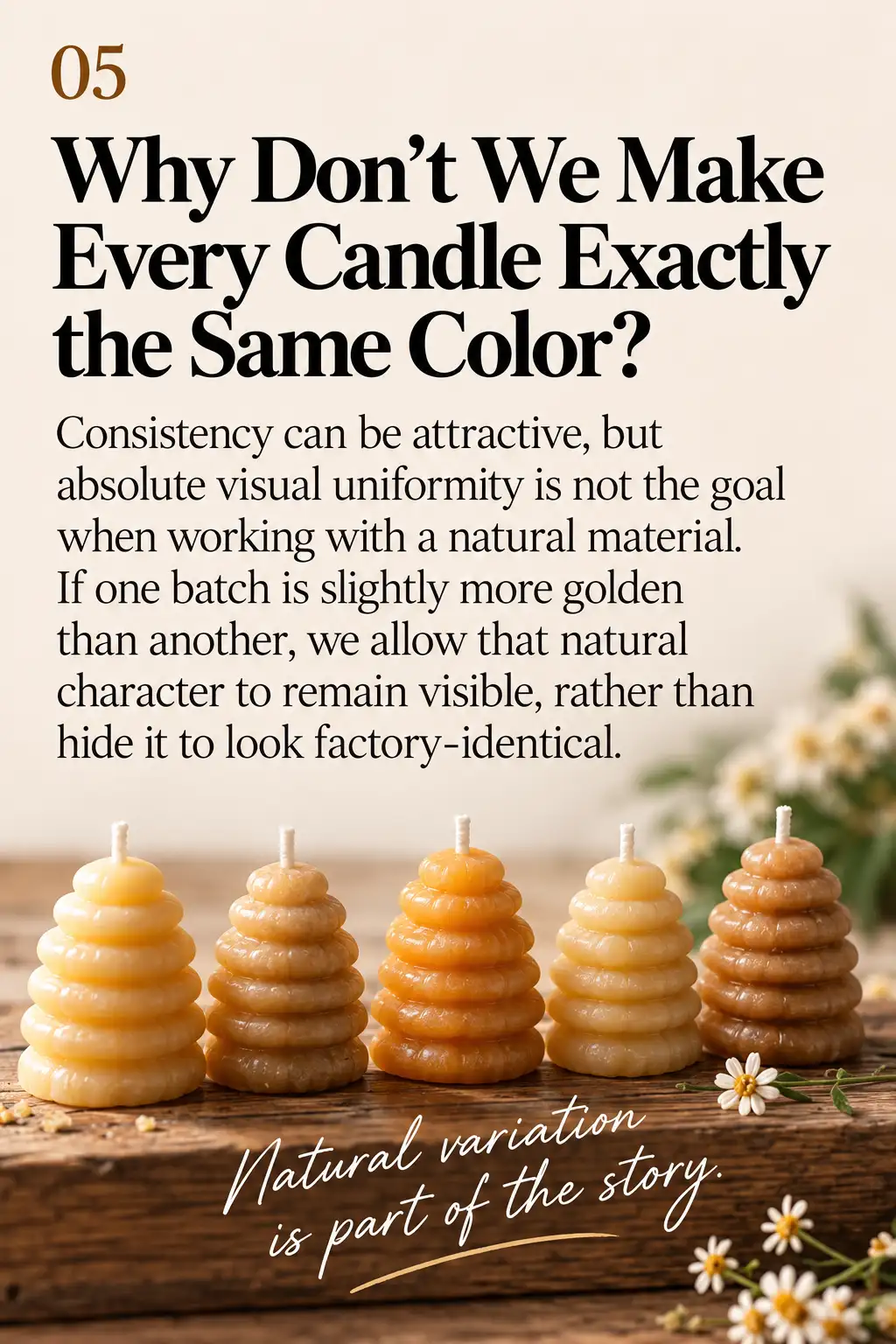
Why Don't We Make Every Candle Exactly the Same Color?
Consistency can be attractive.
But achieving absolute visual uniformity is not always the goal when working with a natural material.
If one batch of beeswax is slightly more golden than another, we don't believe that difference needs to be hidden simply to make every candle look factory-identical.
Instead, we allow the natural character of the beeswax to remain visible.
That means your candle may not always be exactly the same shade as one purchased months earlier.
Even candles shown in photographs may appear slightly different depending on the particular batch of beeswax and the lighting in which they were photographed.
We see that variation as part of the story of the material.
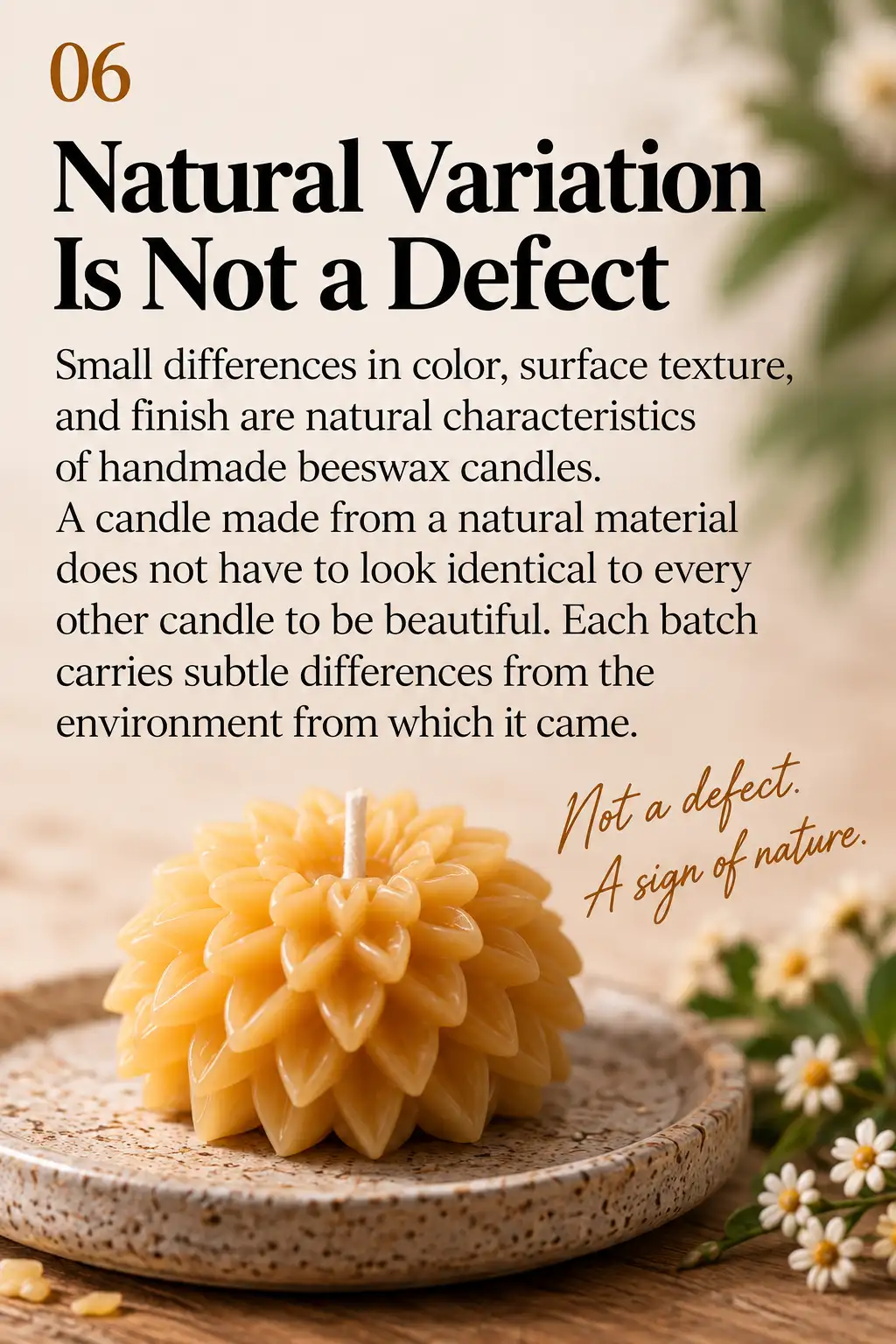
Natural Variation Is Not a Defect
When people first encounter handmade beeswax candles, small differences can sometimes be mistaken for imperfections.
Color is one example.
Surface texture, subtle variations in finish, and the natural development of beeswax bloom are others.
But a handmade candle made from a natural material does not have to look identical to every other candle to be beautiful.
In fact, expecting perfect uniformity can sometimes mean overlooking one of the qualities that makes natural beeswax special.
Each batch carries subtle differences from the environment from which it came.
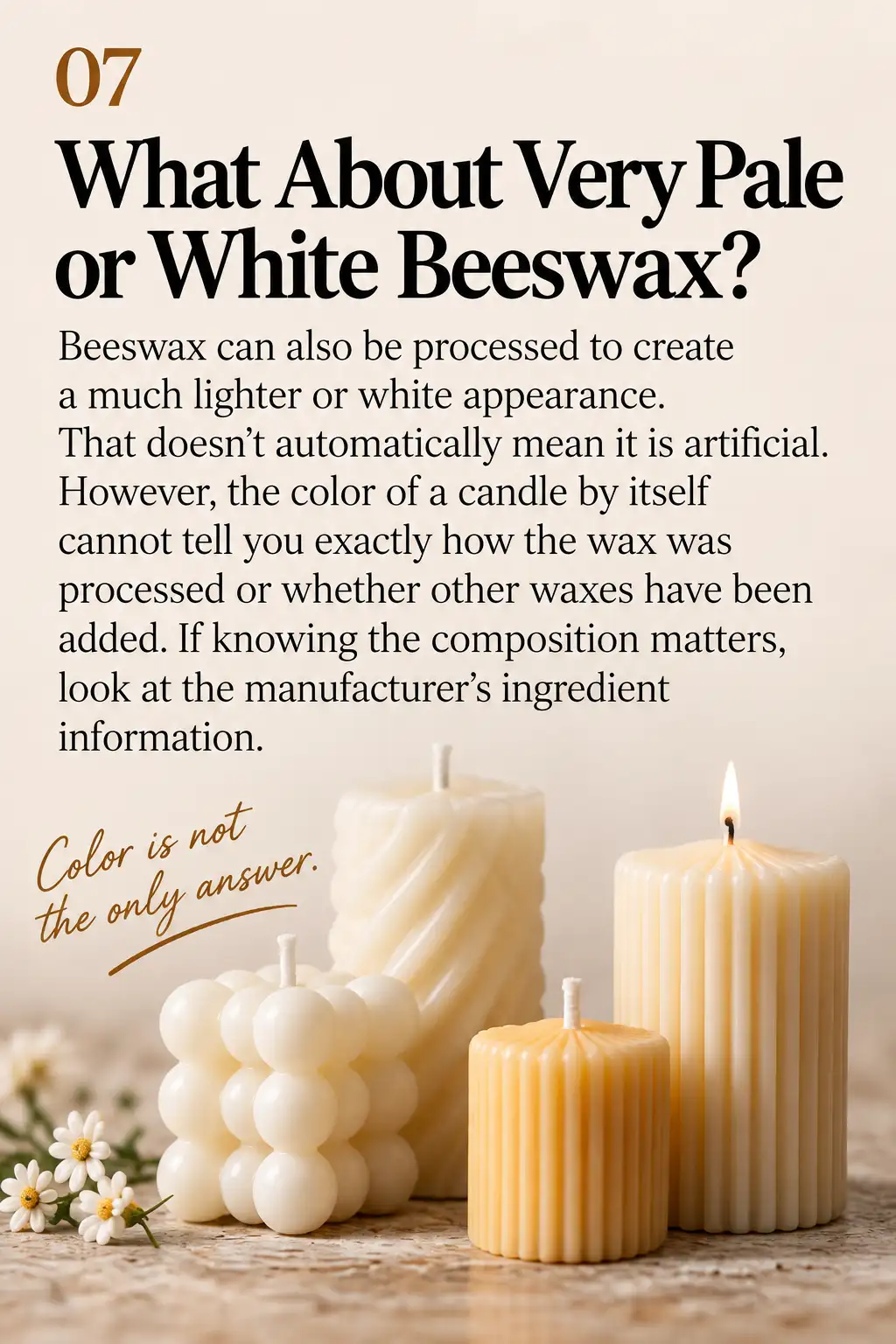
What About Very Pale or White Beeswax?
Beeswax can also be processed to create a much lighter or white appearance.
That doesn't automatically mean it is artificial.
However, the color of a candle by itself cannot tell you exactly how the wax was processed or whether other waxes have been added.
If knowing the composition matters to you, the best approach is to look at the manufacturer's ingredient information rather than judging the candle only by appearance.
Words matter.
“Made with beeswax” and “made from 100% pure beeswax” do not necessarily describe the same thing.
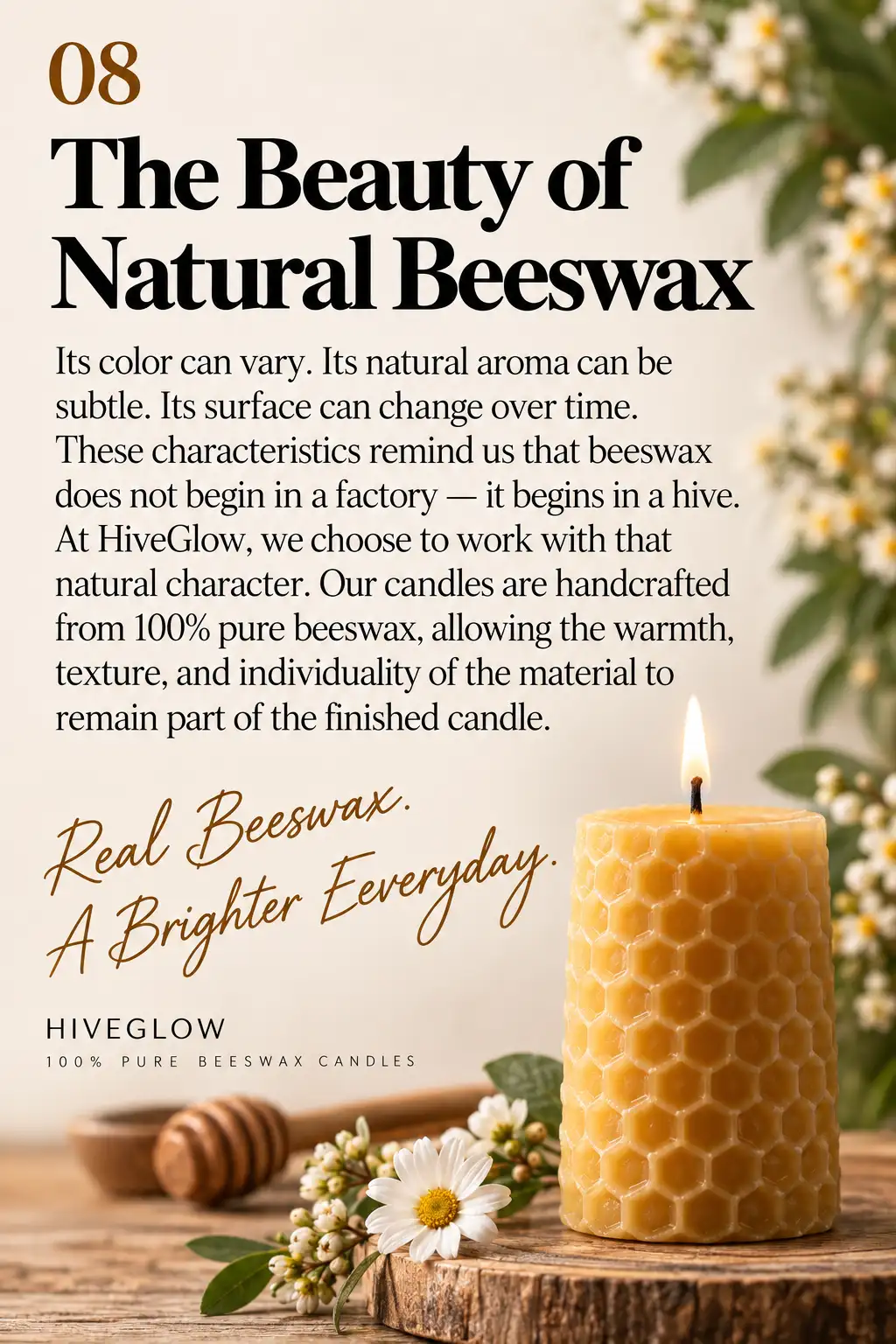
The Beauty of Natural Beeswax
Part of our appreciation for beeswax comes from the fact that it doesn't feel completely standardized.
Its color can vary.
Its natural aroma can be subtle.
Its surface can change over time.
And handmade candles can carry small differences from one piece to another.
These characteristics remind us that beeswax does not begin in a factory.
It begins in a hive.
At HiveGlow, we choose to work with that natural character rather than remove it.
Our candles are handcrafted from 100% pure beeswax, allowing the warmth, texture, and individuality of the material to remain part of the finished candle.
So if your next HiveGlow candle is slightly lighter or deeper in color than your last one, don't worry.
That small difference is simply part of the beauty of natural beeswax.
Keep reading
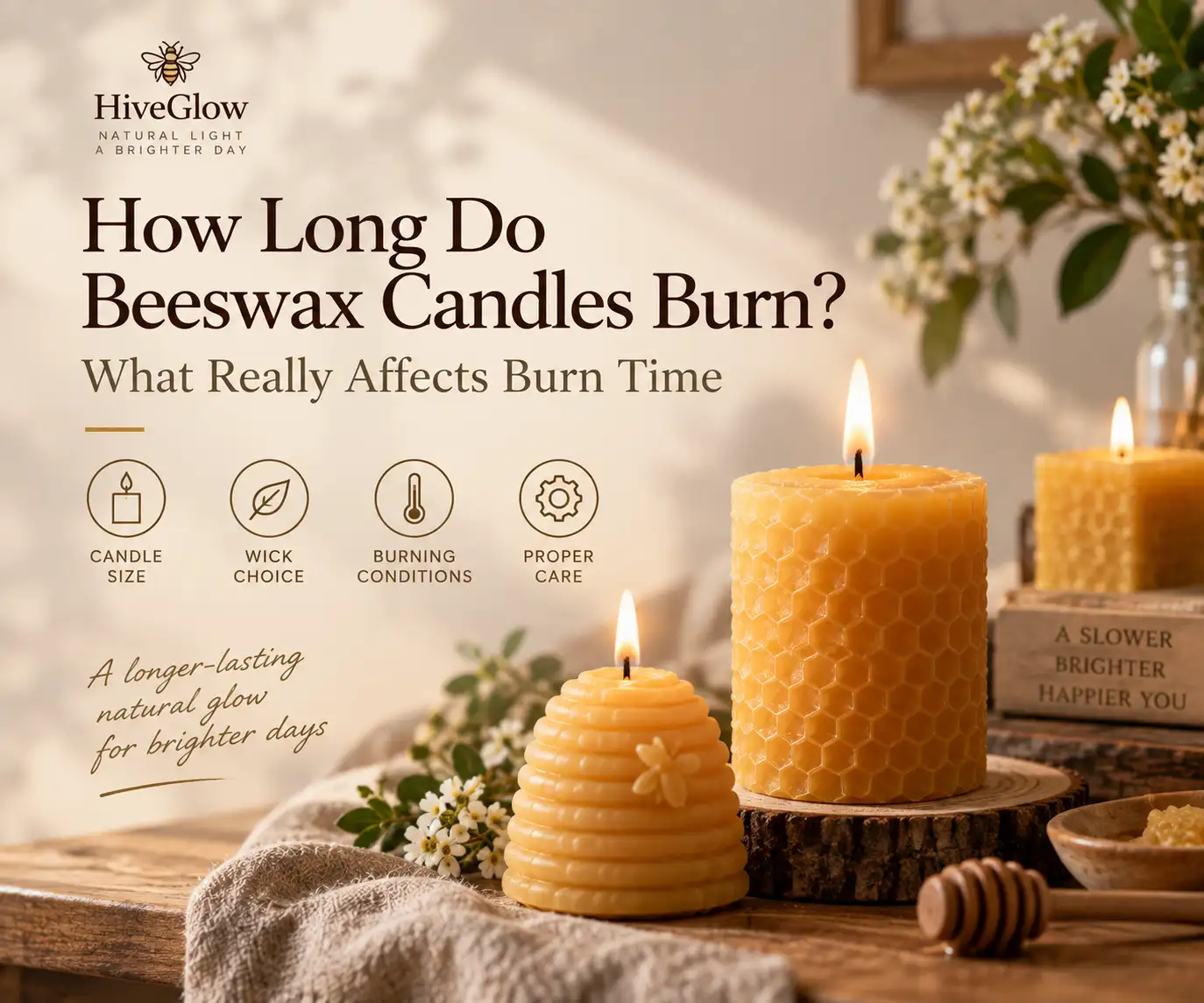
How Long Do Beeswax Candles Burn? What Really Affects Burn Time
How long does a beeswax candle really burn? Explore the key factors that affect burn time, from candle size and wick choice to burning conditions and proper candle care.
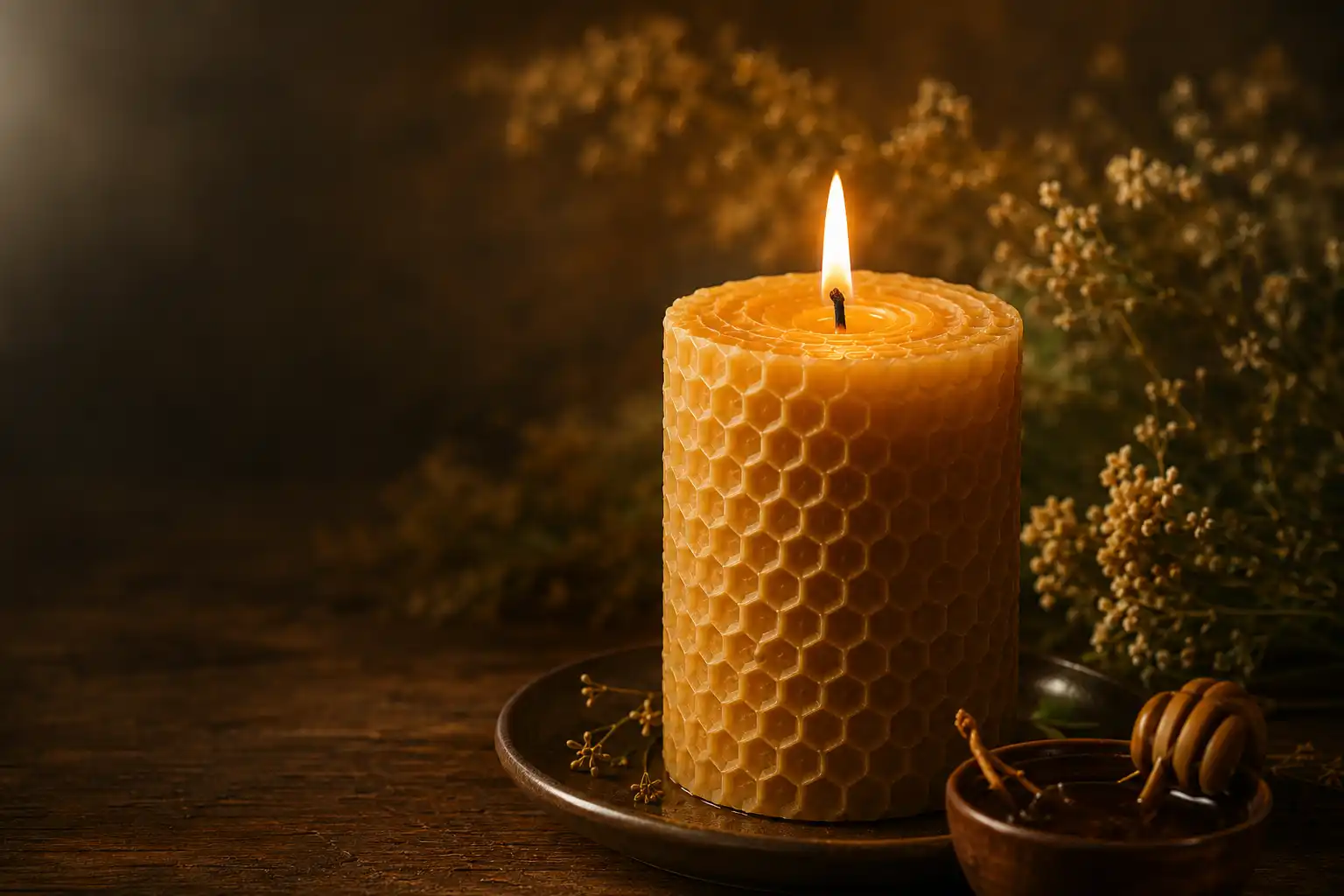
A Beginner's Guide to Beeswax Candles
New to beeswax candles? Learn about their natural color, aroma, bloom, burning behavior, storage, and the qualities that make pure beeswax unique.
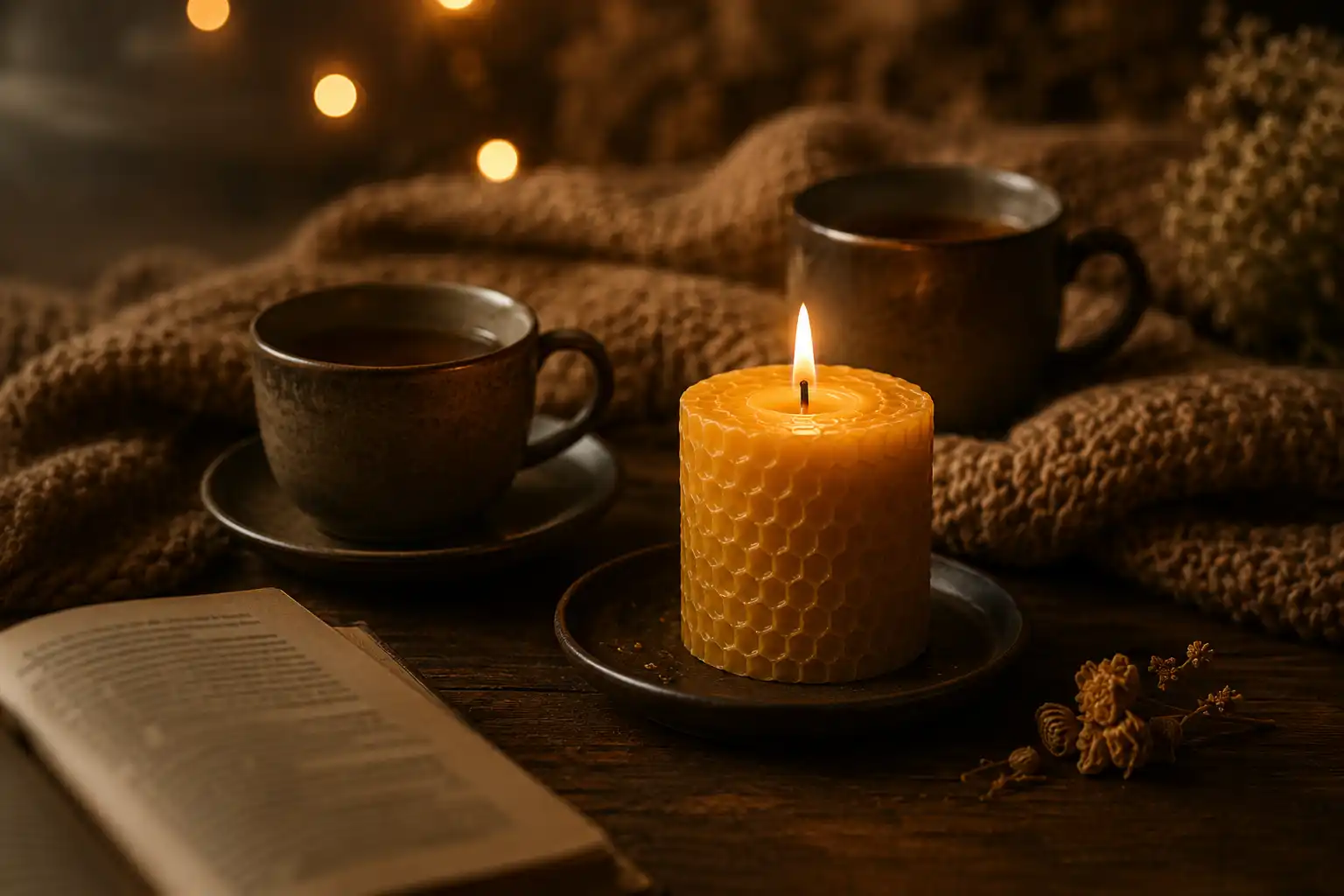
Creating a Cozy Evening Ritual with Candlelight
Slow down the evening with warm candlelight, a quiet corner, and a few simple rituals designed to make home feel softer, calmer, and more intentional.