Guides
How Long Do Beeswax Candles Burn? What Really Affects Burn Time
How long does a beeswax candle really burn? Explore the key factors that affect burn time, from candle size and wick choice to burning conditions and proper candle care.
How Long Do Beeswax Candles Burn? What Really Affects Burn Time
One of the most common questions people ask when choosing a candle is surprisingly simple:
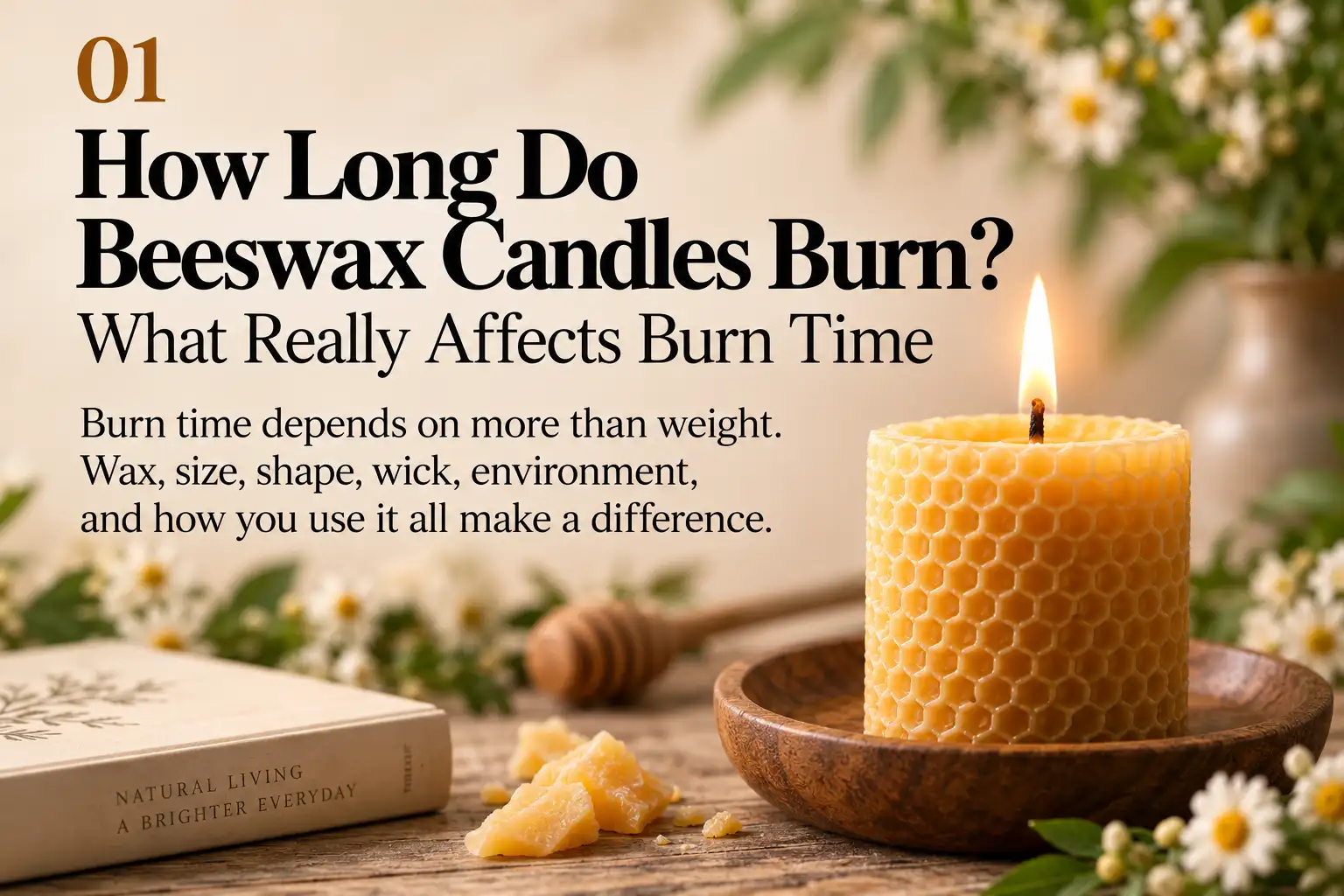
How long will it burn?
It sounds like a question that should have an equally simple answer.
A larger candle should burn longer than a smaller one, and a candle with more wax should provide more hours of light.
While that is generally true, candle burn time depends on much more than weight alone.
The type of wax, candle diameter, wick, shape, environment, and even the way you use the candle can all influence how quickly it burns.
For 100% pure beeswax candles, understanding these factors can help you enjoy the candle more consistently and make better sense of estimated burn times.
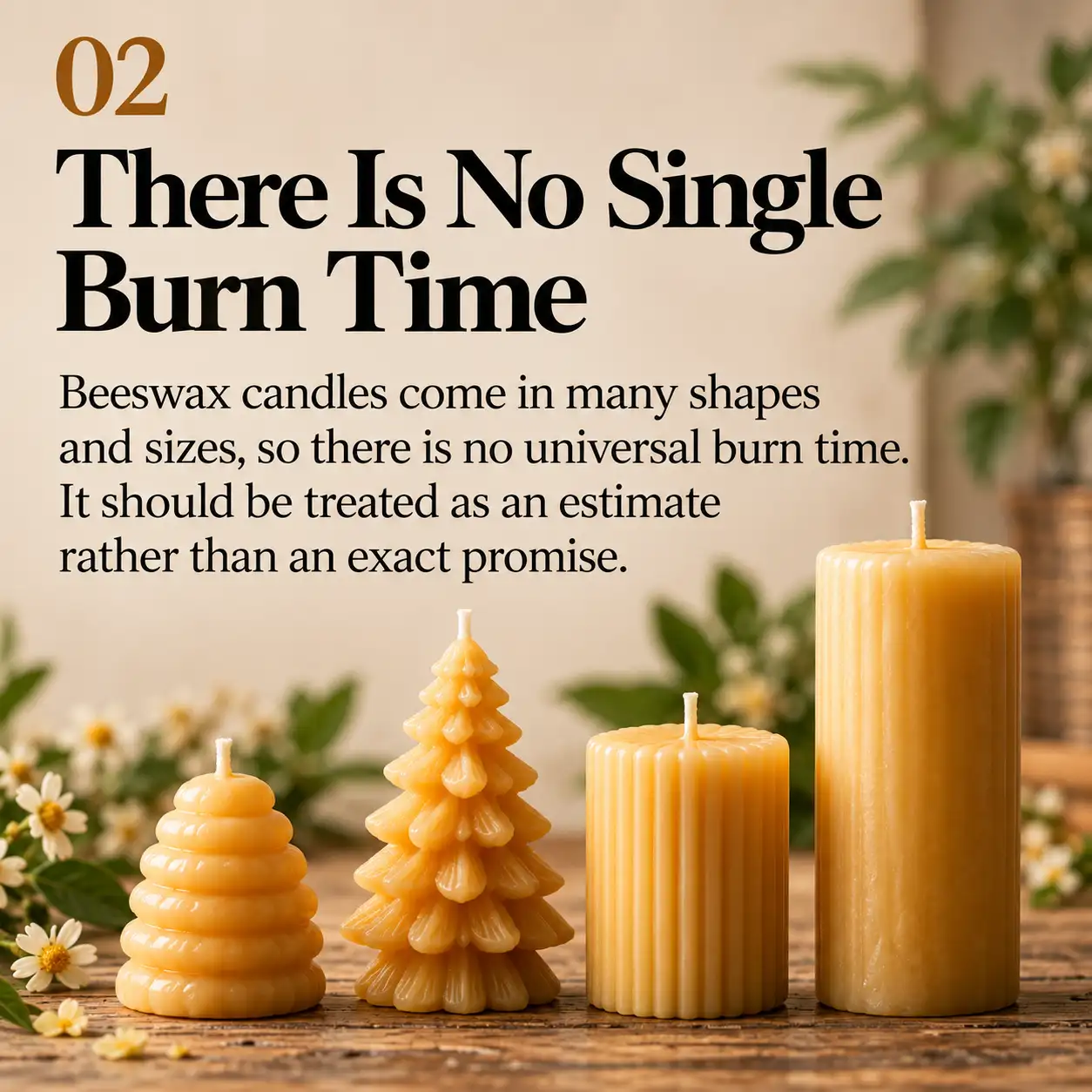
There Is No Single Burn Time for Beeswax Candles
You may sometimes see statements suggesting that beeswax candles burn for a certain number of hours.
But beeswax candles come in countless shapes and sizes, so there is no universal burn time.
A small taper candle and a thick pillar candle can both be made from 100% pure beeswax while behaving very differently once lit.
Even two candles of similar weight may not burn for exactly the same amount of time.
This is why burn time should usually be treated as an estimate rather than an exact promise.
Candle Size and Weight Matter
The amount of wax available is one of the most obvious factors affecting burn time.
Generally, a larger candle containing more beeswax has more fuel available and can burn longer.
But weight alone does not tell the whole story.
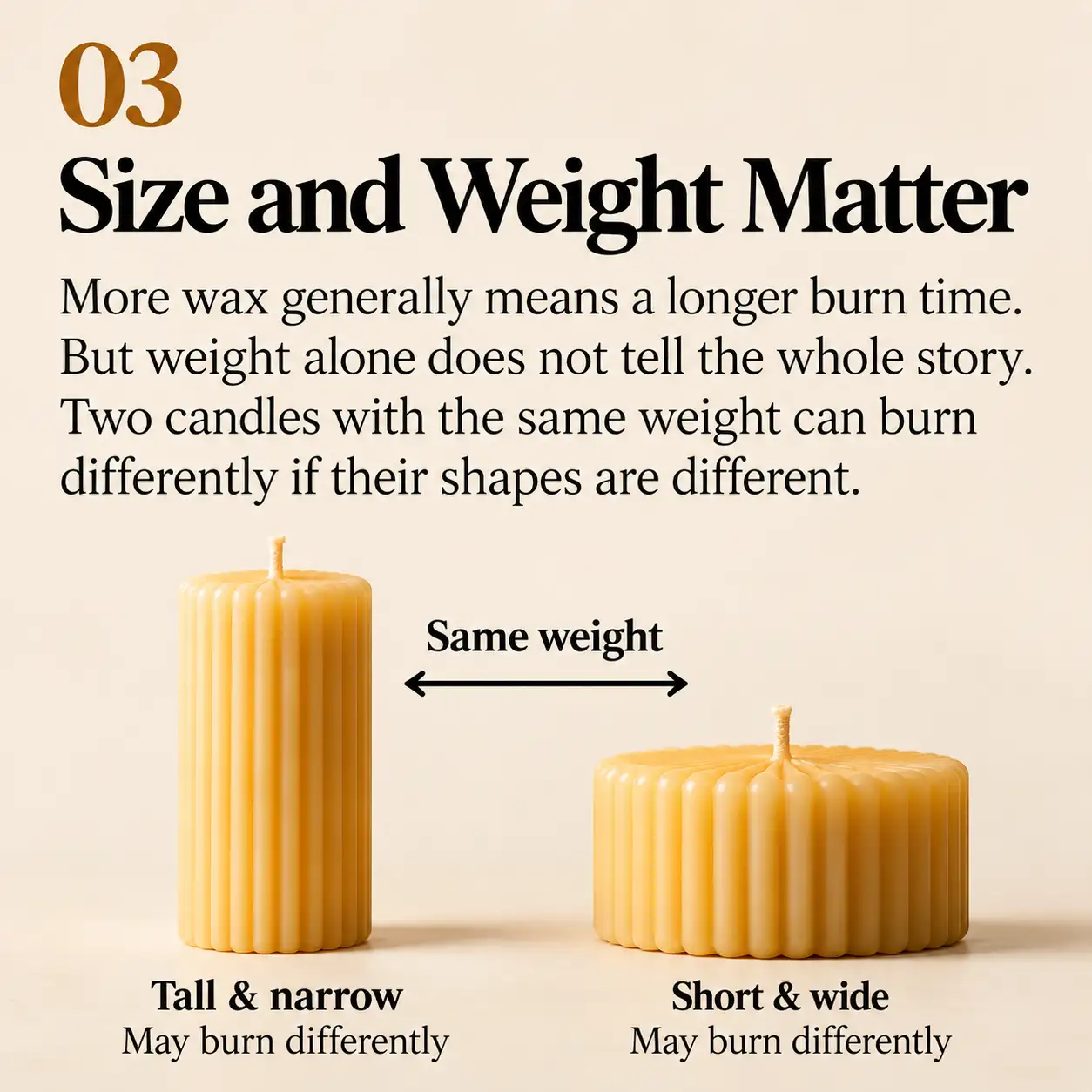
Imagine two candles containing the same amount of beeswax.
One is tall and narrow.
The other is short and wide.
Although their weights may be similar, the way the flame melts and consumes the wax can be different because their diameters and shapes are different.
That brings us to another important factor: candle geometry.
Diameter and Shape Change the Way a Candle Burns
When a candle is lit, heat from the flame creates a pool of melted wax around the wick.
The size and behavior of this melt pool are influenced by the candle's diameter.
A narrow candle does not need to create a very wide melt pool.
A wider pillar candle needs the flame and wick to manage a much larger surface area.
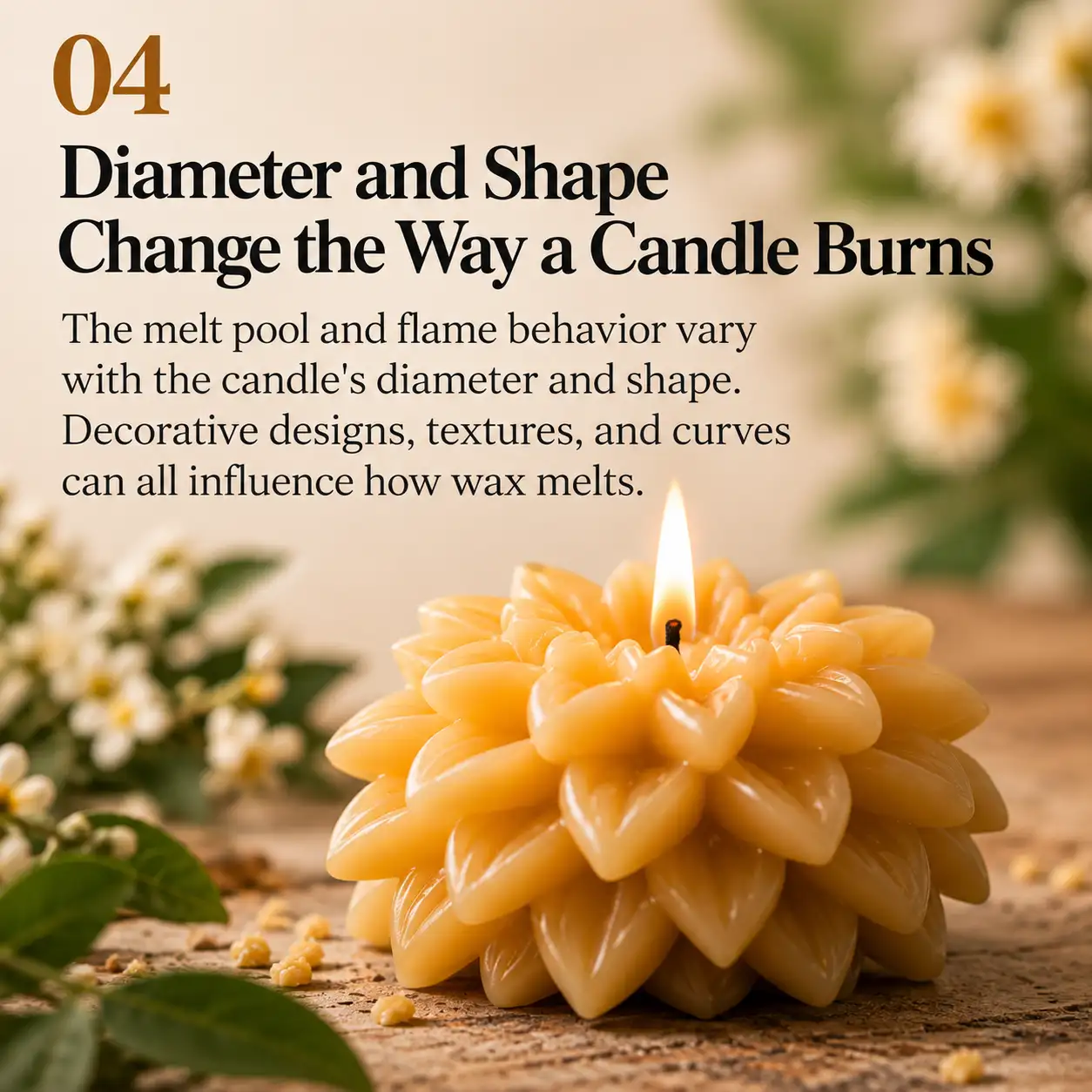
Decorative shapes can make things even more interesting.
Curves, textures, narrow sections, and changing diameters can all influence the way wax melts as the flame moves through the candle.
This is one reason sculptural and handmade beeswax candles may burn differently from simple cylindrical candles.
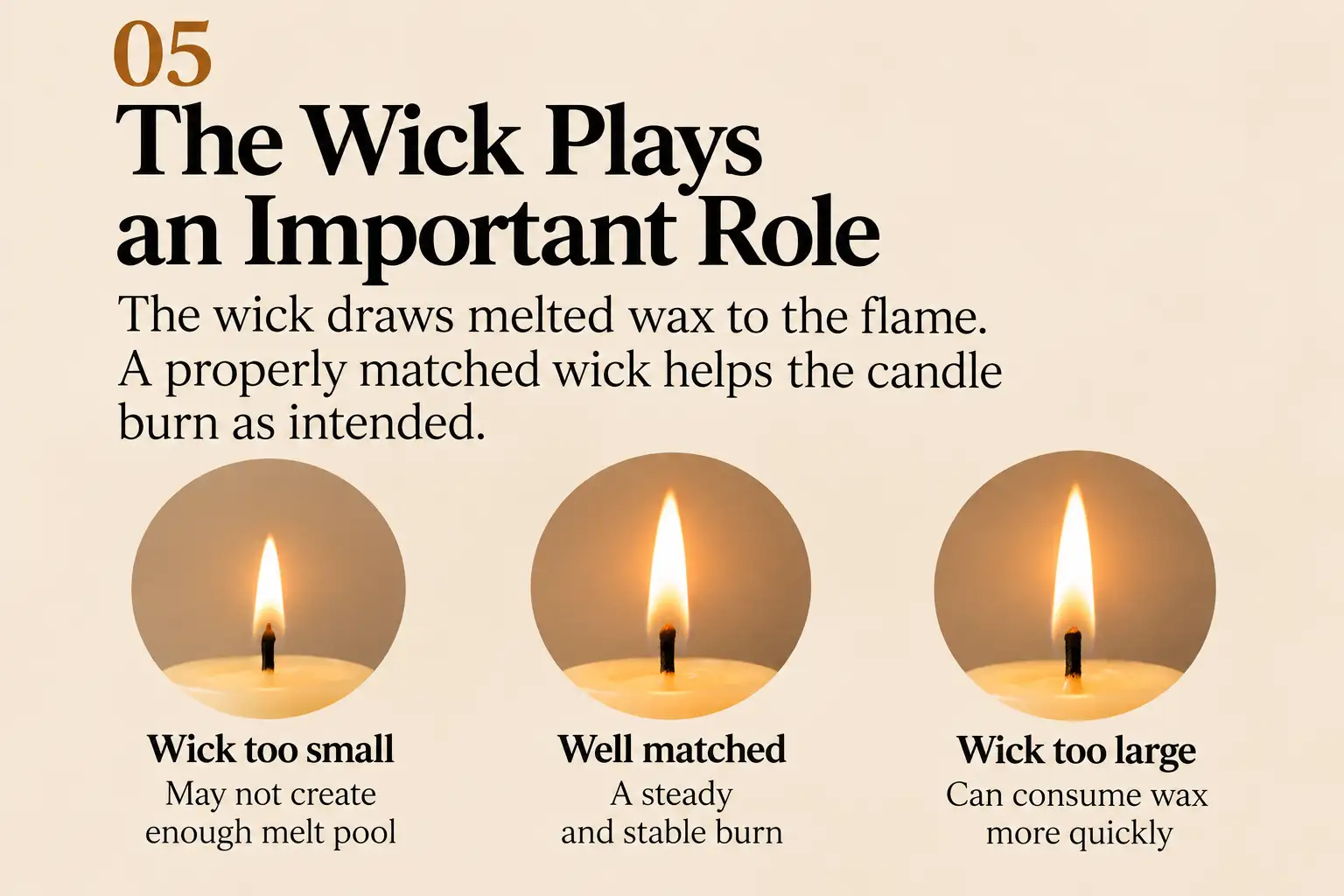
The Wick Plays an Important Role
A wick may look like a small part of a candle, but it has a major influence on how the candle burns.
The wick draws melted wax upward toward the flame, where the wax becomes fuel for combustion.
If the wick and candle are not properly matched, the candle may not burn as intended.
A wick that produces too small a flame may struggle to create an appropriate melt pool.
A flame that is unnecessarily large can consume wax more quickly and may produce an unstable burn.
For candle makers, selecting and testing the wick is therefore an important part of developing a candle.
At HiveGlow, our candles are made from 100% pure beeswax, so wick performance needs to be considered together with the natural characteristics, diameter, and shape of each candle design.
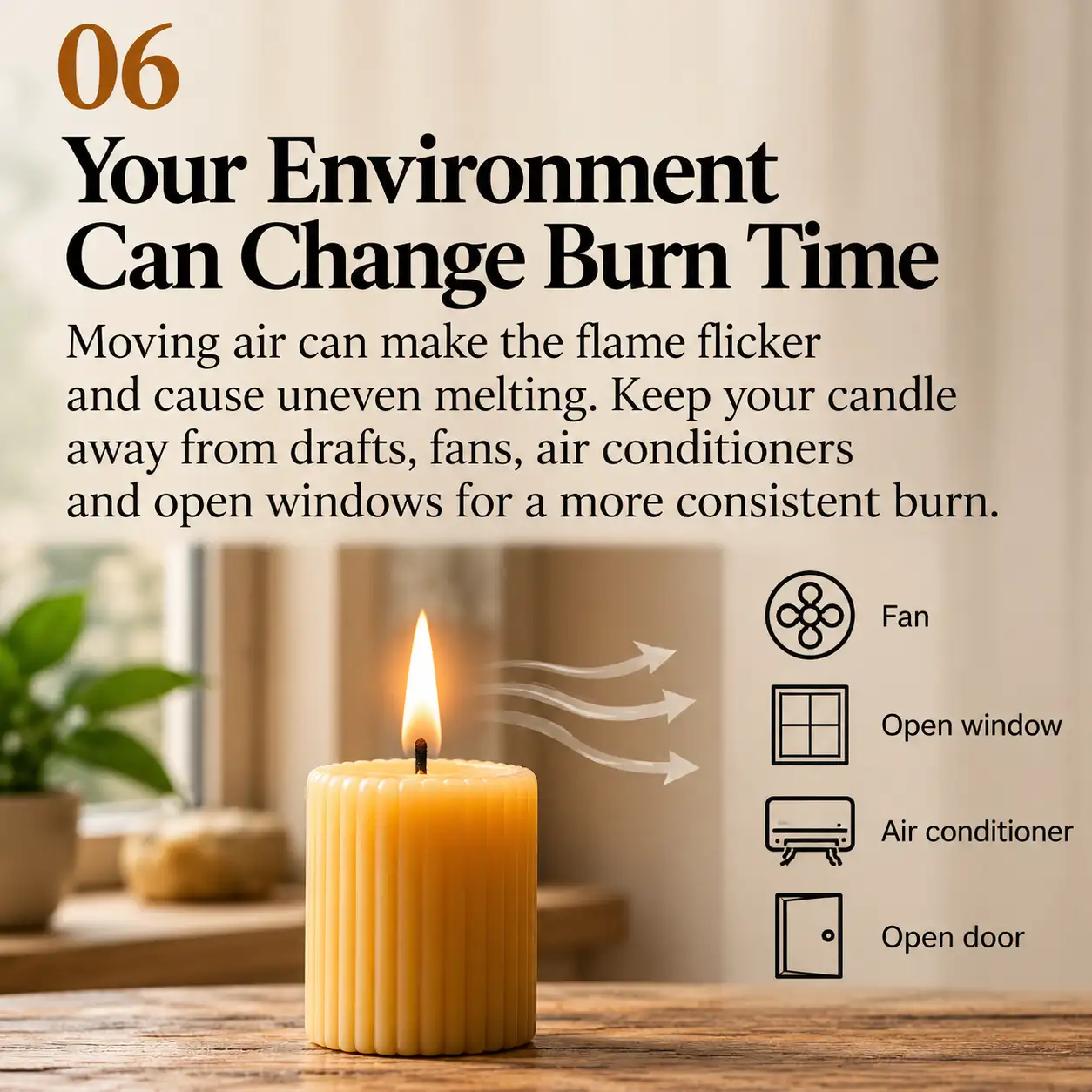
Your Environment Can Change Burn Time
The same candle may behave differently depending on where it is burned.
One of the biggest influences is moving air.
An open window, ceiling fan, air conditioner, heater, or frequently opened door can cause the flame to flicker or lean.
Instead of remaining centered over the wick, the flame may repeatedly move toward one side of the candle.
This can lead to uneven melting and may cause the candle to consume wax differently than it would in a calm environment.
For a more consistent burn, place your candle on a stable, heat-resistant surface away from drafts and strong airflow.
This isn't only about burn time—it also contributes to safer candle use.
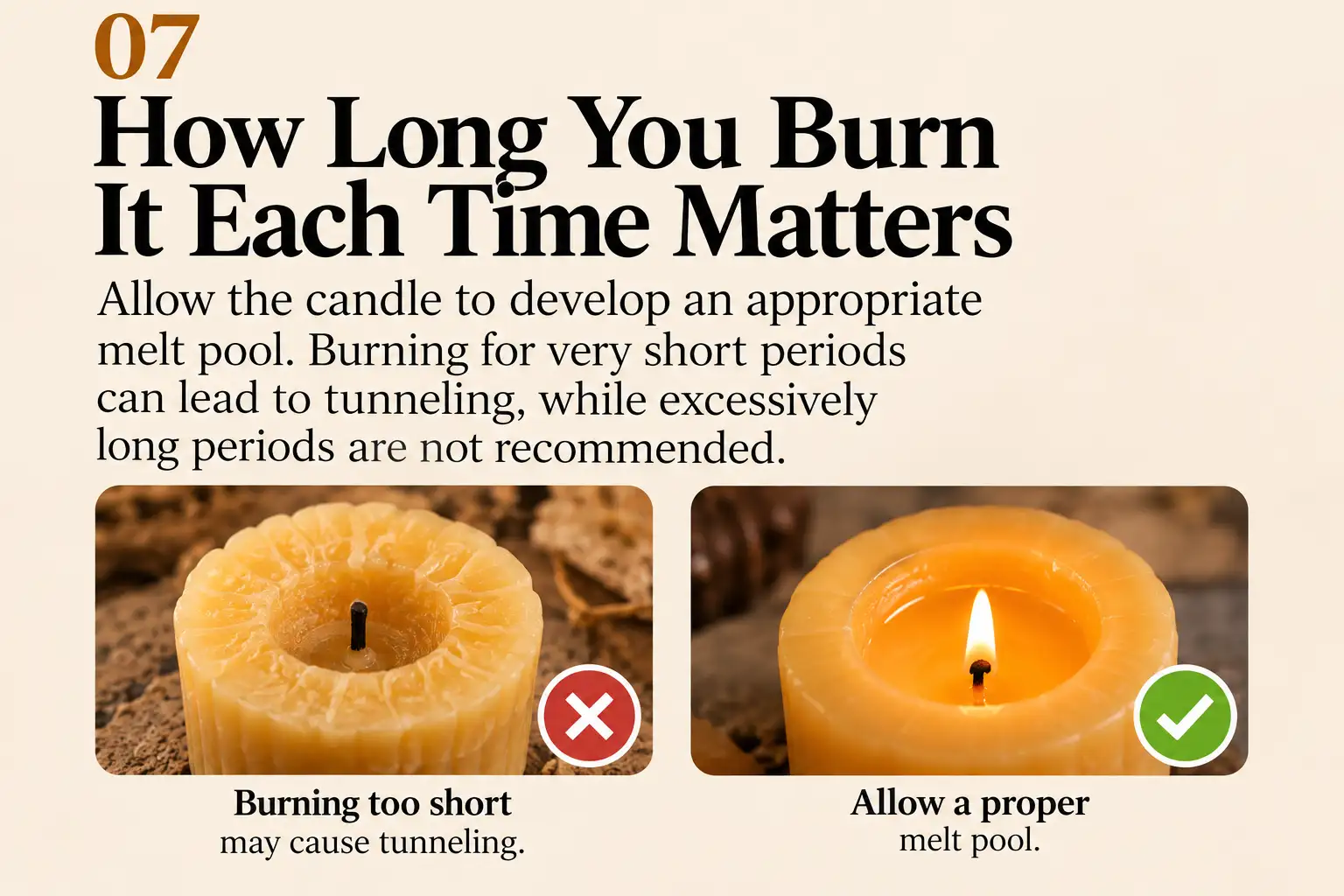
How Long You Burn the Candle Each Time Matters
Burning a candle for very short periods repeatedly can affect the way the candle develops.
For many pillar-style candles, extinguishing the candle before an appropriate melt pool develops can encourage the center to burn downward while wax remains around the outer edges.
Over time, this can contribute to tunneling.
On the other hand, leaving a candle burning for excessively long periods is not the answer either.
Always follow the candle maker's care and safety instructions.
Good candle care is about allowing the candle to burn properly while keeping each session within safe limits.

Wick Trimming Can Affect the Flame
Before relighting a candle, checking the wick is a simple but useful habit.
An excessively long or mushroomed wick can create a larger or less stable flame.
That can change how quickly the wax is consumed.
Proper wick maintenance helps keep the flame more controlled and can contribute to a more consistent burn throughout the candle's life.
We've covered wick trimming in more detail in our candle care guides, but it is worth remembering that a few seconds of maintenance before lighting can make a meaningful difference.
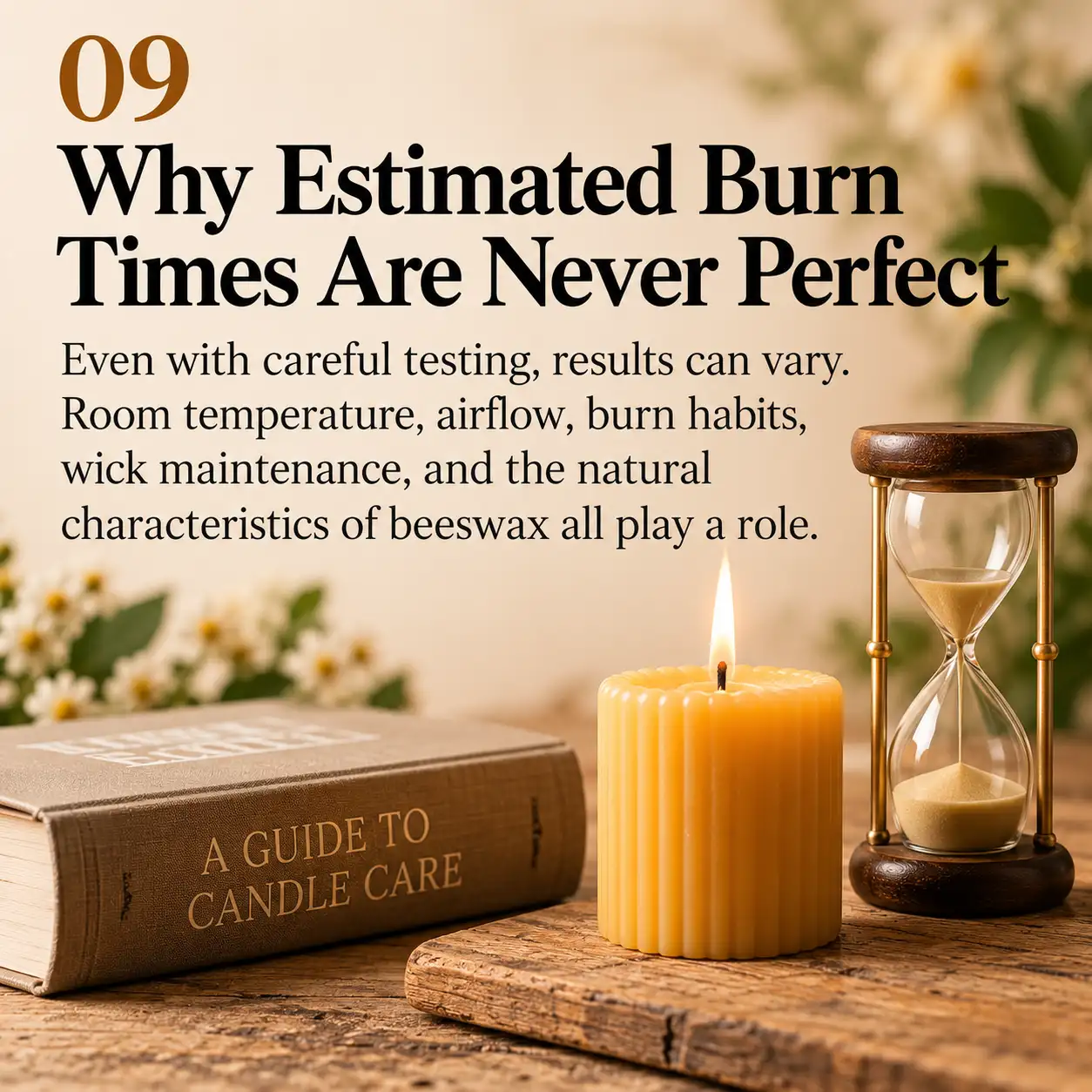
Why Estimated Burn Times Are Never Perfect
Even when a candle has been carefully tested, the burn time you experience at home may not match the stated estimate down to the minute.
There are simply too many variables.
Room temperature can vary.
Airflow can vary.
Burn sessions can vary.
Wick maintenance can vary.
And beeswax itself is a natural material.
For these reasons, a burn-time figure is best understood as a useful reference based on testing under particular conditions—not a stopwatch guarantee.
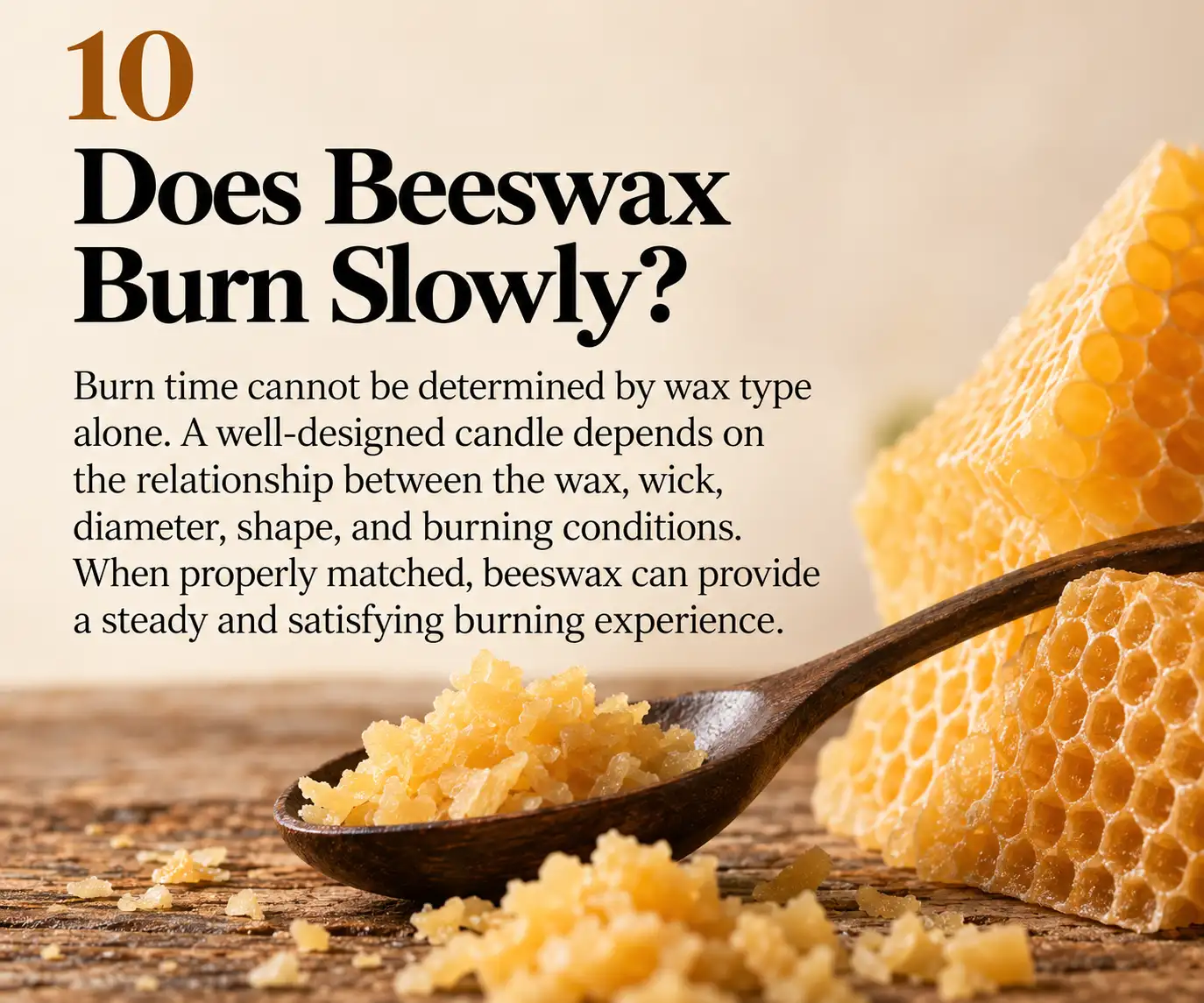
Does Beeswax Burn Slowly?
Beeswax is often associated with long-burning candles, but comparisons between different types of candles need some context.
Burn time cannot be determined by wax type alone.
A well-designed candle depends on the relationship between the wax, wick, diameter, shape, and burning conditions.
For this reason, we prefer not to claim that every beeswax candle will automatically outlast every candle made from another wax.
What we can say is that beeswax has physical characteristics that make it an excellent material for carefully designed candles—and when the candle and wick are properly matched, it can provide a steady and satisfying burning experience.
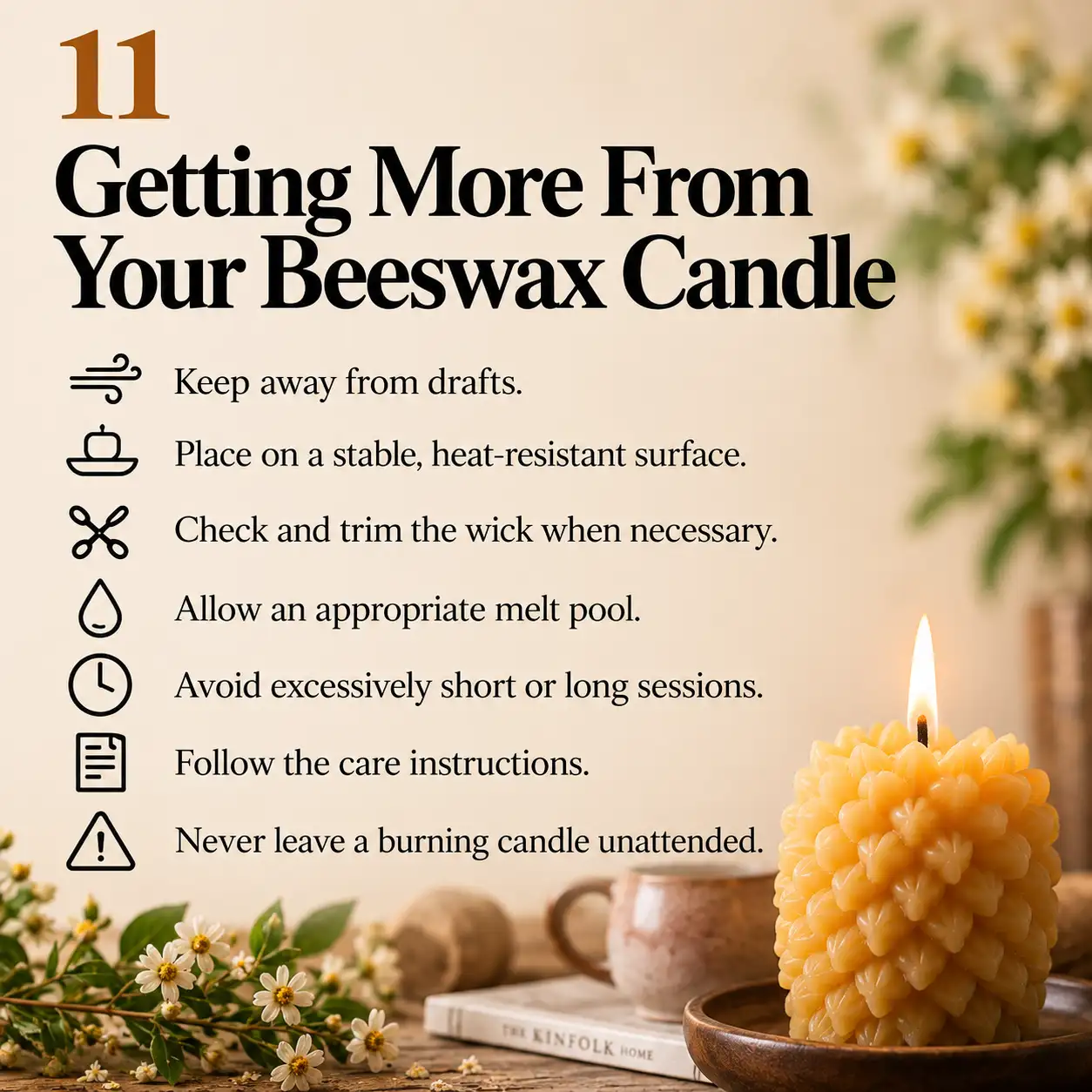
Getting More From Your Beeswax Candle
You don't need a complicated routine to care for a beeswax candle.
A few good habits can help:
Keep the candle away from drafts.
Place it on a stable, heat-resistant surface.
Check and trim the wick when necessary before relighting.
Allow the candle to establish an appropriate melt pool.
Avoid excessively short or excessively long burning sessions.
Follow the specific care instructions provided with your candle.
Most importantly, never leave a burning candle unattended.
A Candle Is More Than a Number of Hours
Burn time is useful when comparing candle sizes and deciding which candle suits your space.
But we don't think a candle should be reduced to a calculation of grams divided by hours.
The experience matters too.
The warm flame.
The changing shape of the wax.
The quiet light at the end of the day.
And, with natural beeswax, the knowledge that the material began inside a beehive long before it became a candle.
At HiveGlow, we handcraft our candles from 100% pure beeswax, preserving the natural character of the material while carefully considering how each design burns.
A good beeswax candle isn't simply about burning for as many hours as possible.
It's about burning beautifully throughout the time it gives you.
Keep reading
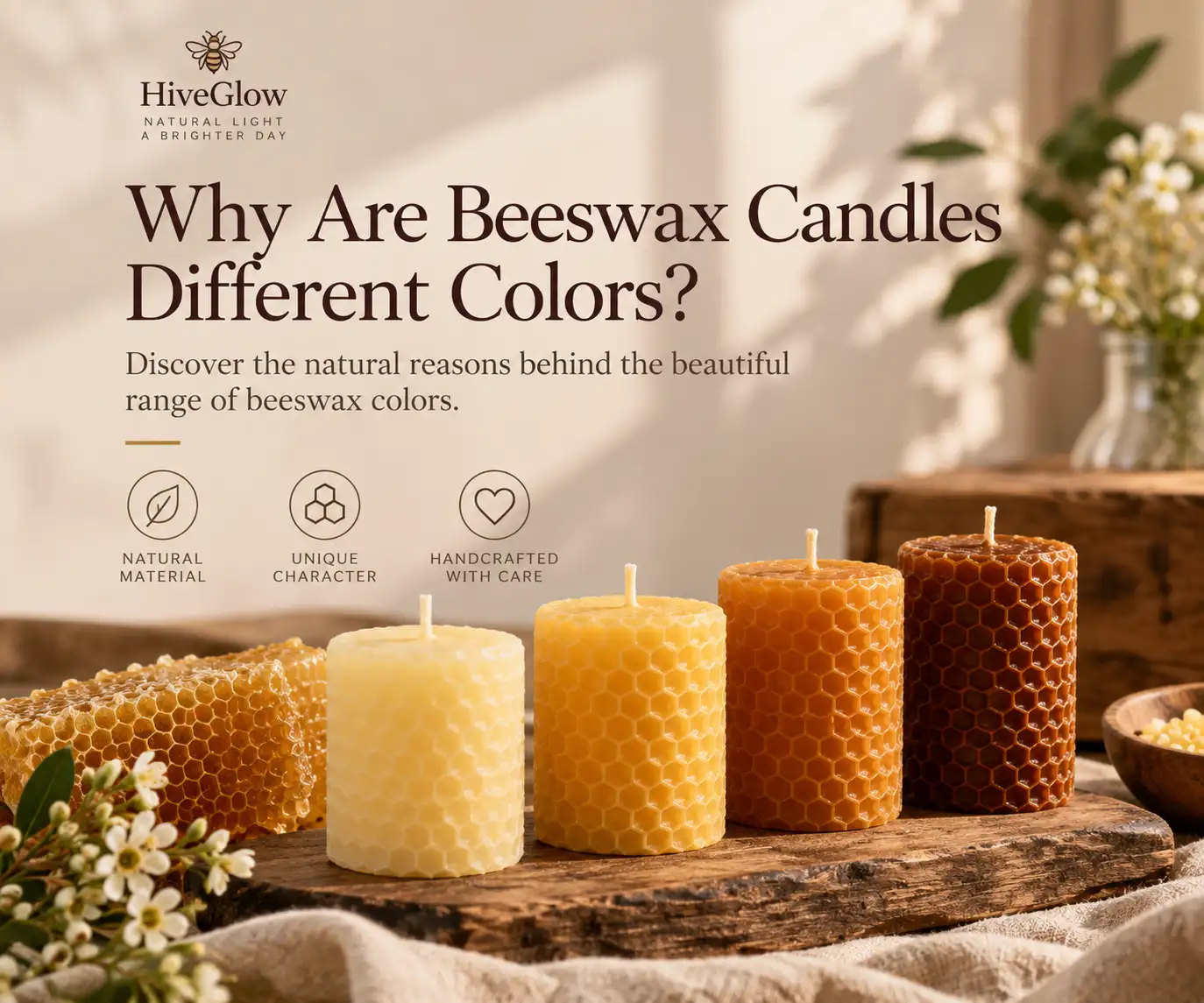
Why Are Beeswax Candles Different Colors?
Why do pure beeswax candles vary from pale yellow to deep golden amber? Discover what causes these natural color differences and why they are part of the unique character of 100% pure beeswax.
A Beginner's Guide to Beeswax Candles
New to beeswax candles? Learn about their natural color, aroma, bloom, burning behavior, storage, and the qualities that make pure beeswax unique.
Creating a Cozy Evening Ritual with Candlelight
Slow down the evening with warm candlelight, a quiet corner, and a few simple rituals designed to make home feel softer, calmer, and more intentional.