Beeswax
Beeswax vs Soy Wax: What's the Difference?
Beeswax and soy wax come from very different origins. Explore their differences in texture, appearance, aroma, candle styles, and natural character.
Beeswax and soy wax are two popular materials used in modern candle making, but they come from very different origins and behave differently once they become candles.
Neither material needs to be judged simply as “good” or “bad.” Understanding their differences makes it easier to choose the candle that best fits what you value.
Where They Come From
Beeswax is produced naturally by honeybees and used to construct honeycomb inside the hive.
Soy wax, on the other hand, is a plant-derived wax generally produced from processed soybean oil.
That difference in origin influences everything from texture and color to the way candle makers work with each material.
Appearance and Texture
Natural beeswax is typically firm and can range from pale yellow to rich golden amber.
It is particularly well suited to pillar candles, tapers, molded candles, and sculptural forms where the candle needs to support its own shape.
Soy wax is generally softer and is widely used for container candles such as candles poured into jars or tins.
Natural Aroma
Pure beeswax can carry a subtle natural aroma associated with honeycomb and the hive. Its strength varies because beeswax is a natural material.
Soy wax itself is relatively neutral and is commonly paired with fragrance oils when used in scented candles.
For people who appreciate candles with the character of the raw material itself, beeswax offers a particularly distinctive experience.
Color Variations
Beeswax does not always have exactly the same color.
The plants visited by bees, the age of the comb, and processing can all influence the finished wax.
That means one batch may appear bright golden yellow while another is slightly lighter or darker.
Soy wax tends to have a lighter, creamier appearance and can offer greater visual consistency.
Candle Making
Beeswax is relatively hard and holds detailed shapes well, making it ideal for many decorative and freestanding candle designs.
Soy wax's softer characteristics make it especially popular for container candles.
Both materials require careful wick selection and testing to achieve good burning performance.
Which Should You Choose?
Choose according to what you want from the candle.
If you prefer a softer container candle that can easily carry added fragrance, soy wax may be a good option.
If you value natural wax character, sculptural forms, warm golden tones, and a direct connection to the hive, beeswax offers something uniquely its own.
At HiveGlow, that character is exactly why we choose 100% pure beeswax.
We want the material to remain visible, tangible, and unmistakably natural.
Keep reading
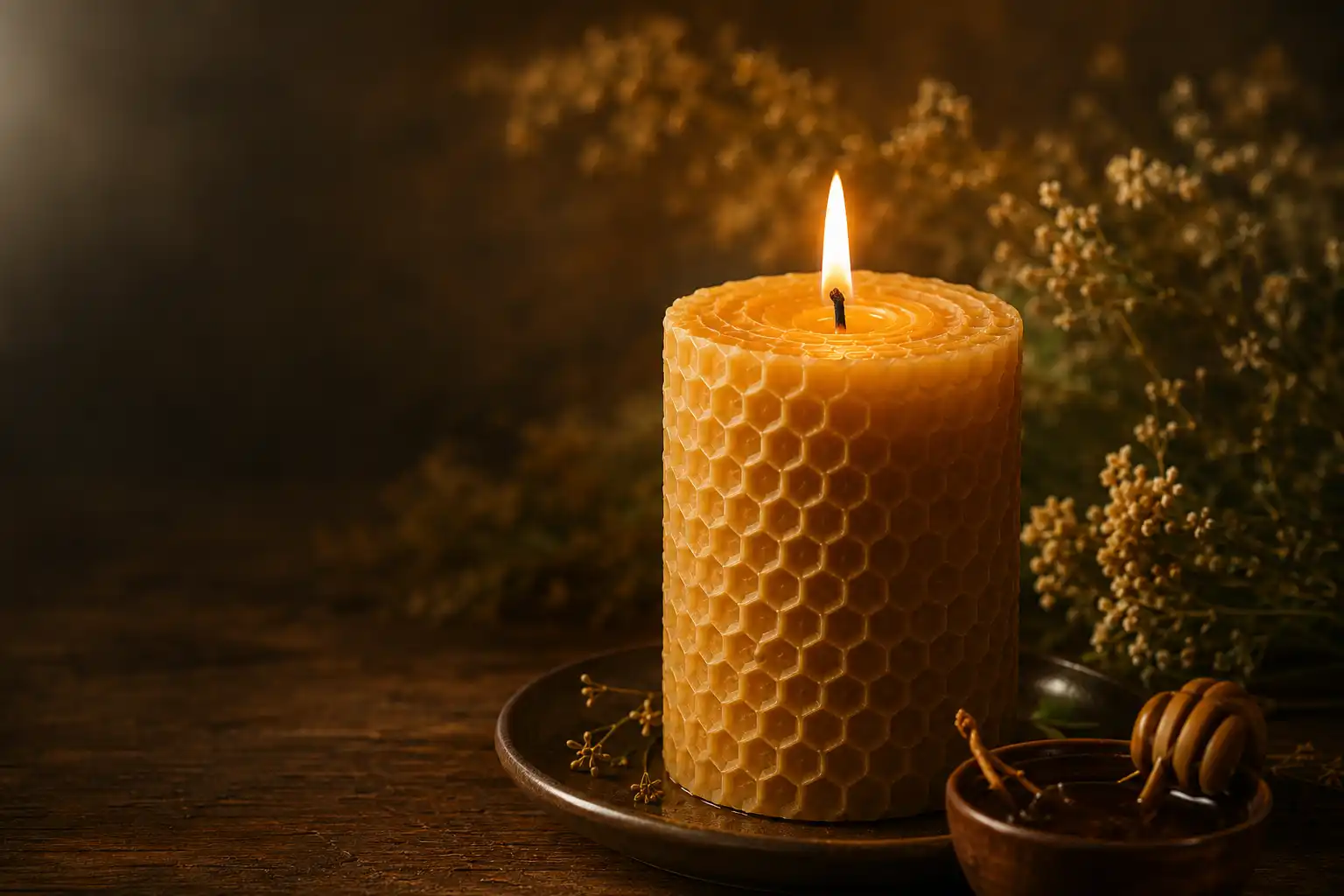
A Beginner's Guide to Beeswax Candles
New to beeswax candles? Learn about their natural color, aroma, bloom, burning behavior, storage, and the qualities that make pure beeswax unique.

Creating a Cozy Evening Ritual with Candlelight
Slow down the evening with warm candlelight, a quiet corner, and a few simple rituals designed to make home feel softer, calmer, and more intentional.
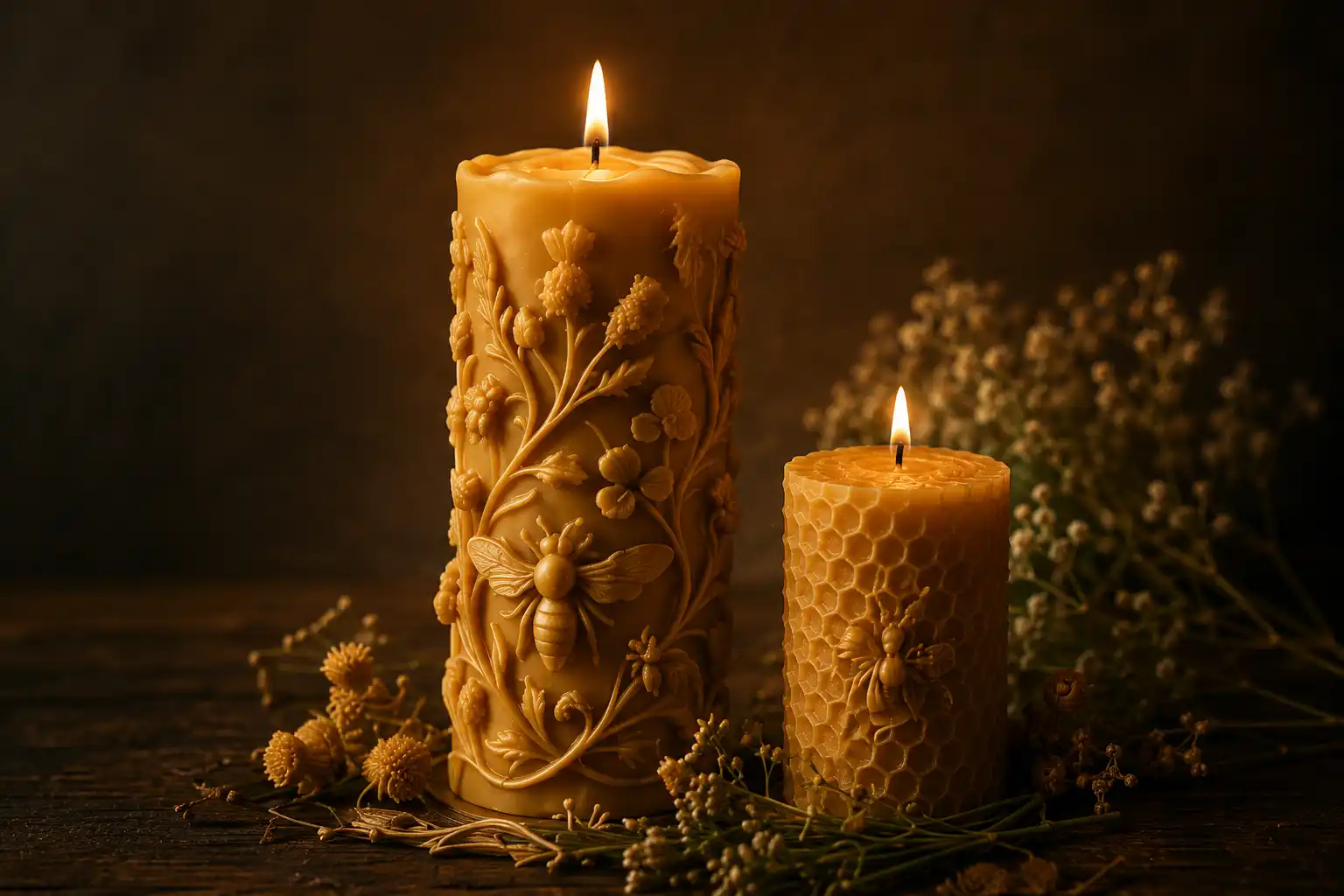
Why Handmade Candles Are Never Exactly the Same
Small differences in color, texture, and finish are part of the beauty of handmade beeswax candles—each piece carries its own natural character.