Guides
Why Do Beeswax Candles Drip Wax? Understanding the Natural Melt
Why does a beeswax candle sometimes drip while burning? Learn how flame, wick, airflow, candle shape, and burning conditions influence melting—and why a little flowing wax can be a natural part of the candle experience.
Why Do Beeswax Candles Drip Wax? Understanding the Natural Melt
Light a beeswax candle and something beautiful begins to happen.
The solid wax slowly softens around the flame, a small pool of liquid wax develops near the wick, and the candle gradually changes shape as it burns.
Sometimes, a little melted wax may travel over the edge and run down the side of the candle.
This often leads to a simple question:

Why does my candle drip wax?
For freestanding candles, including pillar and sculptural beeswax candles, occasional dripping can be a natural part of the burning process.
Understanding why it happens can help you enjoy your candle more safely and confidently.
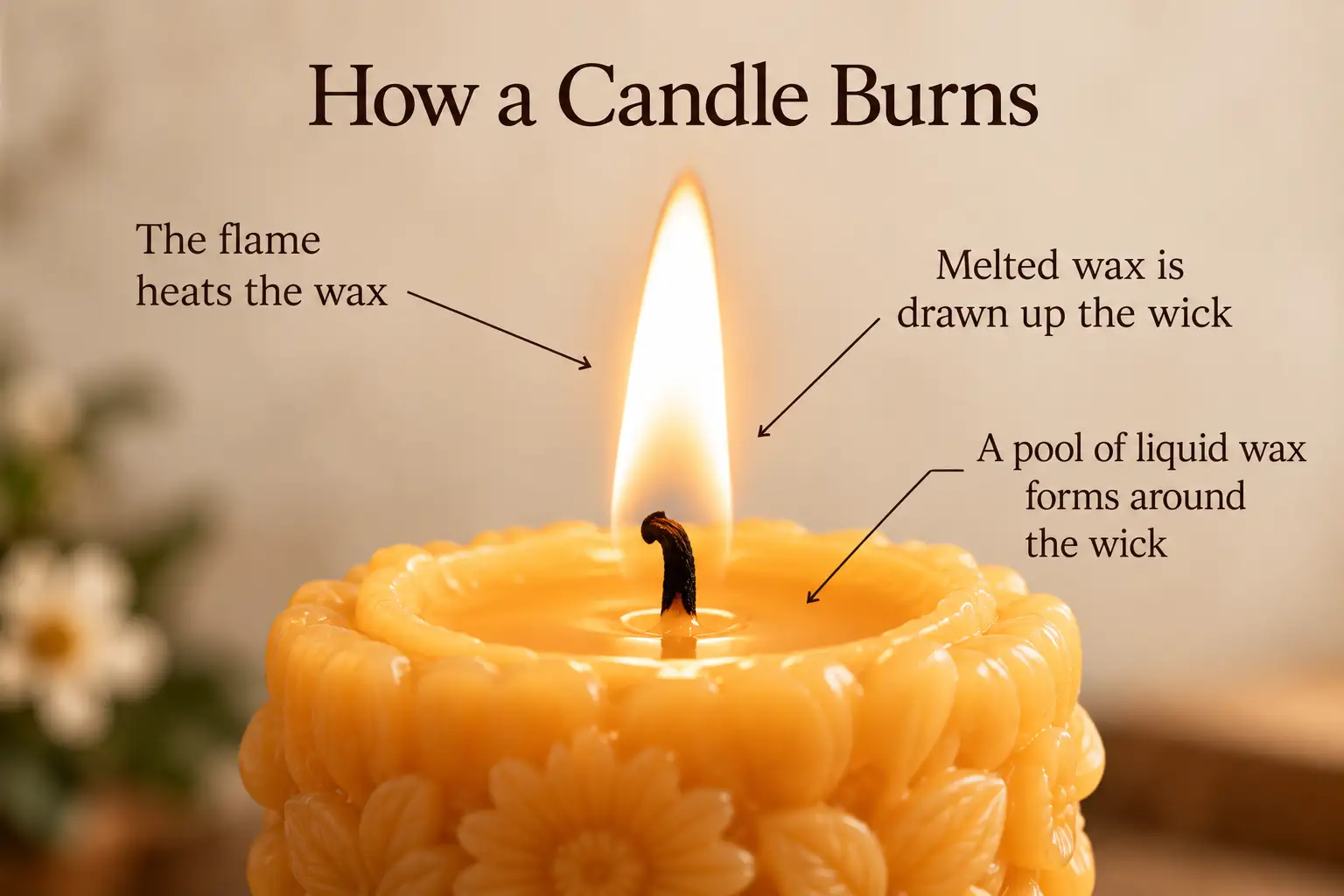
Why Does Candle Wax Melt in the First Place?
A candle flame does not simply burn the solid wax underneath it.
Instead, heat from the flame melts the wax surrounding the wick.
The wick draws this liquid wax upward, where it is heated further and becomes fuel for the flame.
As long as the relationship between the flame, wick, and melted wax remains balanced, much of that liquid wax is consumed through the burning process.
But not every drop of melted wax necessarily stays inside the melt pool.
If liquid wax reaches an edge or finds a path down the side of the candle, gravity takes over.
That's when you see a drip.
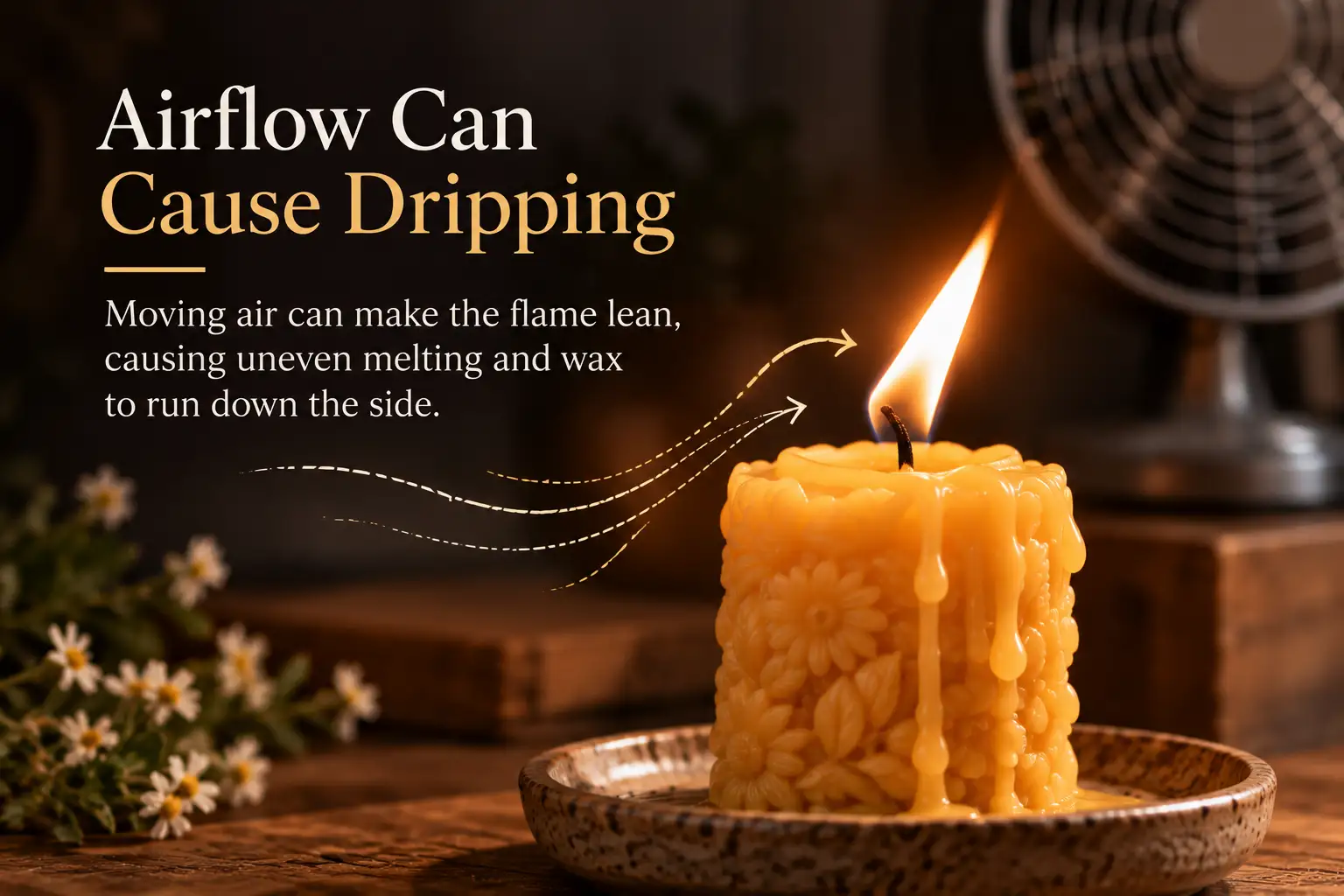
Airflow Can Make a Big Difference
One of the most common reasons a candle begins dripping unevenly is moving air.
An open window, fan, air conditioner, heater, or even frequent movement around the candle can cause the flame to lean.
When the flame consistently points toward one side, that side receives more heat.
The wax there may melt faster than the wax on the opposite side.
Eventually, the liquid wax can reach the edge and begin flowing downward.
This is why we recommend burning candles away from strong drafts.
A calm flame generally creates a more even burning environment.

Candle Shape Matters
Not every candle is a simple cylinder.
Sculptural candles may include flowers, animals, geometric patterns, honeycomb textures, or other decorative forms.
These details make the candle visually interesting, but they also create differences in thickness and surface area.
As the flame moves downward, one section may contain more wax than another.
Edges and raised details may soften at different speeds.
Because of this, a sculptural candle may not melt as symmetrically as a traditional pillar candle.
That isn't necessarily a defect.
It can simply be part of burning a candle whose shape was designed to be more than a cylinder.
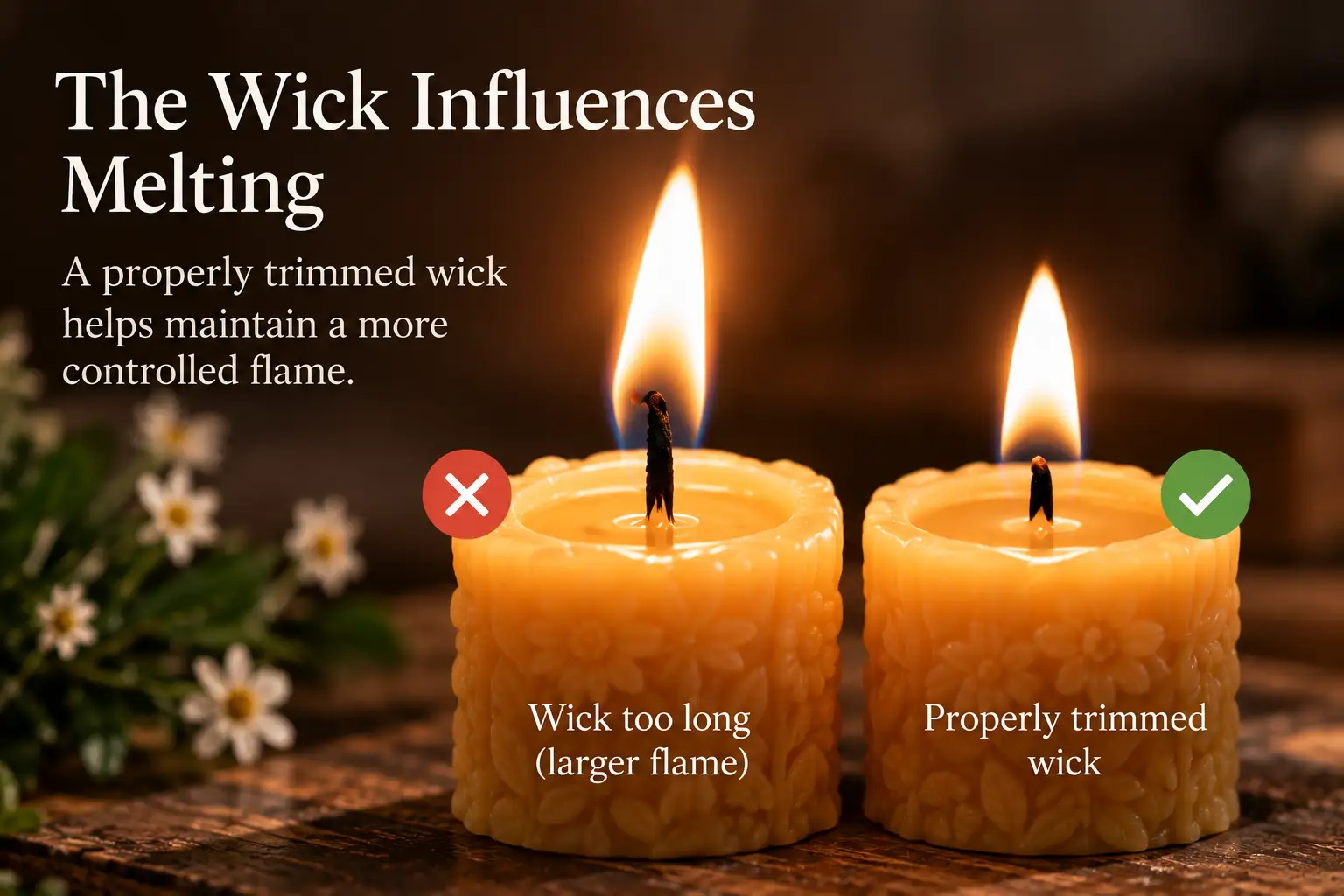
The Wick Influences How Much Wax Melts
The wick is another important part of the equation.
A wick must create enough heat to melt the wax surrounding it while maintaining an appropriate flame.
A larger flame generally creates more heat and can produce a larger melt pool.
A smaller flame creates less heat.
This is why candle makers consider the relationship between wick size, candle diameter, shape, and wax when developing a candle.
The goal is not to prevent the wax from melting—that would make a candle impossible to burn.
The goal is to create a balanced burn.
A Long Wick Can Change the Flame
As a candle burns, the wick can become longer or develop a small carbon buildup at the tip.
An excessively long wick may produce a larger or less stable flame.
More heat can mean more melted wax.
Before relighting your candle, check the wick and trim it when necessary according to the candle's care instructions.
This simple habit can help maintain a more controlled flame.

Room Temperature Can Also Play a Role
Candles don't always burn under identical conditions.
A candle burning in a warm room is already surrounded by a different environment than one burning in a cooler space.
Direct sunlight or nearby heat sources can also warm and soften the candle before it is even lit.
When possible, keep the candle away from heaters, fireplaces, strong sunlight, and other sources of excessive heat.
The surface supporting the candle should also be stable and heat-resistant.
Is Dripping Wax a Sign of Poor Quality?
Not necessarily.
A dripping candle does not automatically mean the wax is poor quality or that something is wrong with the candle.
Many factors influence whether wax drips:
the shape of the candle,
the wick,
air movement,
room conditions,
burning duration,
and the way the wax melts around decorative details.
This is particularly important with freestanding and sculptural candles.
Unlike a container candle, there is no glass wall surrounding the wax.
If melted wax reaches the outer edge, it has somewhere to go.
Does 100% Pure Beeswax Never Drip?
No.
Being made from 100% pure beeswax does not mean a candle can never drip.
Pure beeswax still melts when heated.
That's exactly what needs to happen for the candle to provide fuel to the flame.
Claims that a genuine beeswax candle should never drip can oversimplify how candles actually work.
Even a carefully made pure beeswax candle can experience some dripping depending on its shape and the conditions in which it is burned.
At HiveGlow, we prefer to explain the natural behavior of the material rather than promise that wax will always behave exactly the same way.

Why a Candle Holder Matters
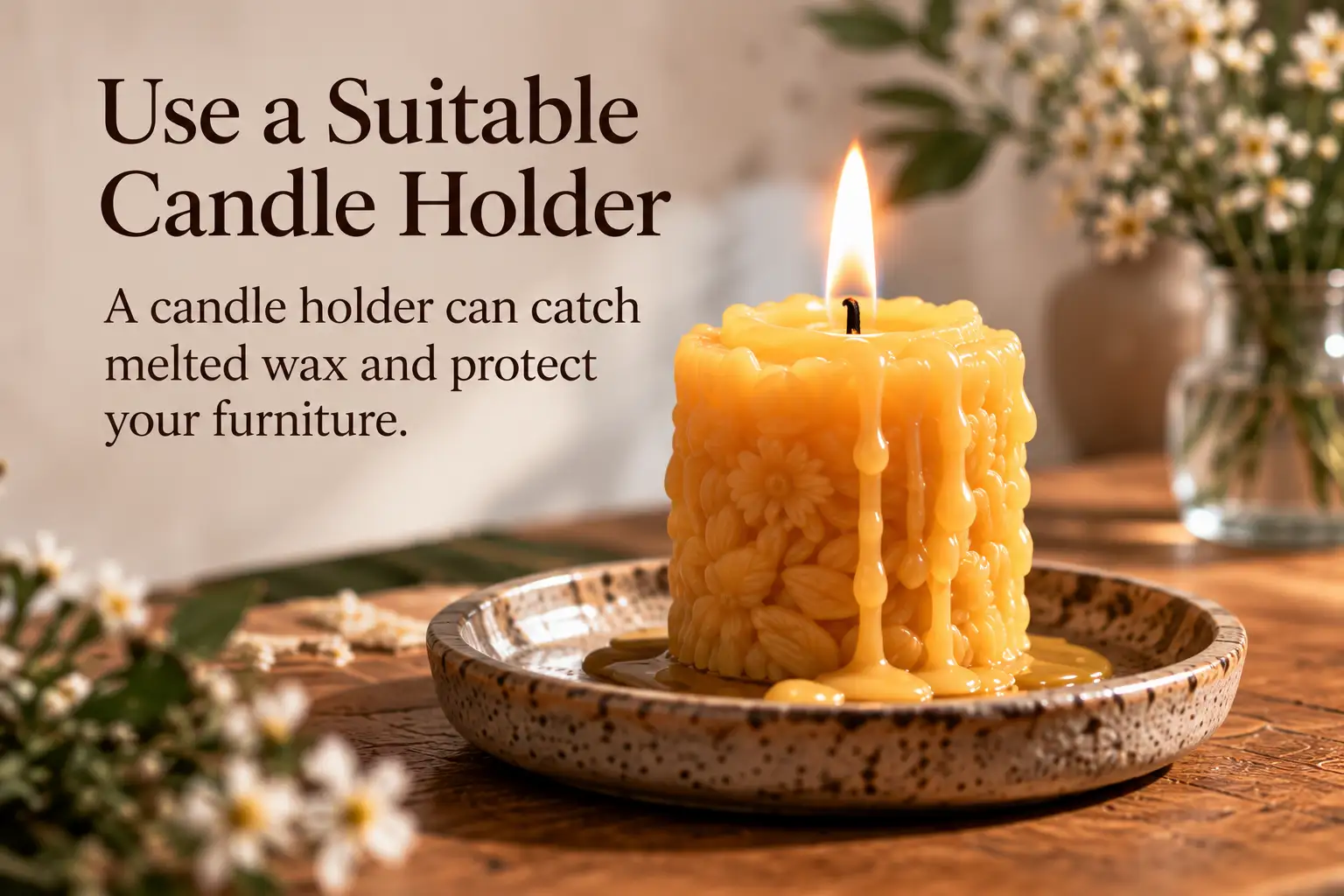
Because melted wax can occasionally escape from a freestanding candle, always place it on an appropriate candle holder or heat-resistant surface capable of catching wax.
The holder should extend beyond the candle itself.
This becomes especially important for sculptural candles, where irregular shapes can create less predictable melt paths.
A suitable candle holder helps protect furniture and makes melted wax easier to manage.
Never place a freestanding candle directly on an unprotected table or other surface that could be damaged by heat or wax.
The Changing Shape Is Part of the Experience
There is something interesting about watching a freestanding candle change over time.
A new candle begins with carefully defined edges and details.
After several burns, those details soften.
Wax moves.
The surface changes.
The candle gradually becomes a record of the hours it has spent producing light.
For us, this transformation isn't something that always needs to be hidden.
Our candles are handcrafted from 100% pure beeswax, a natural material designed to melt and become fuel for the flame.
A little flowing wax can simply be part of that transformation.
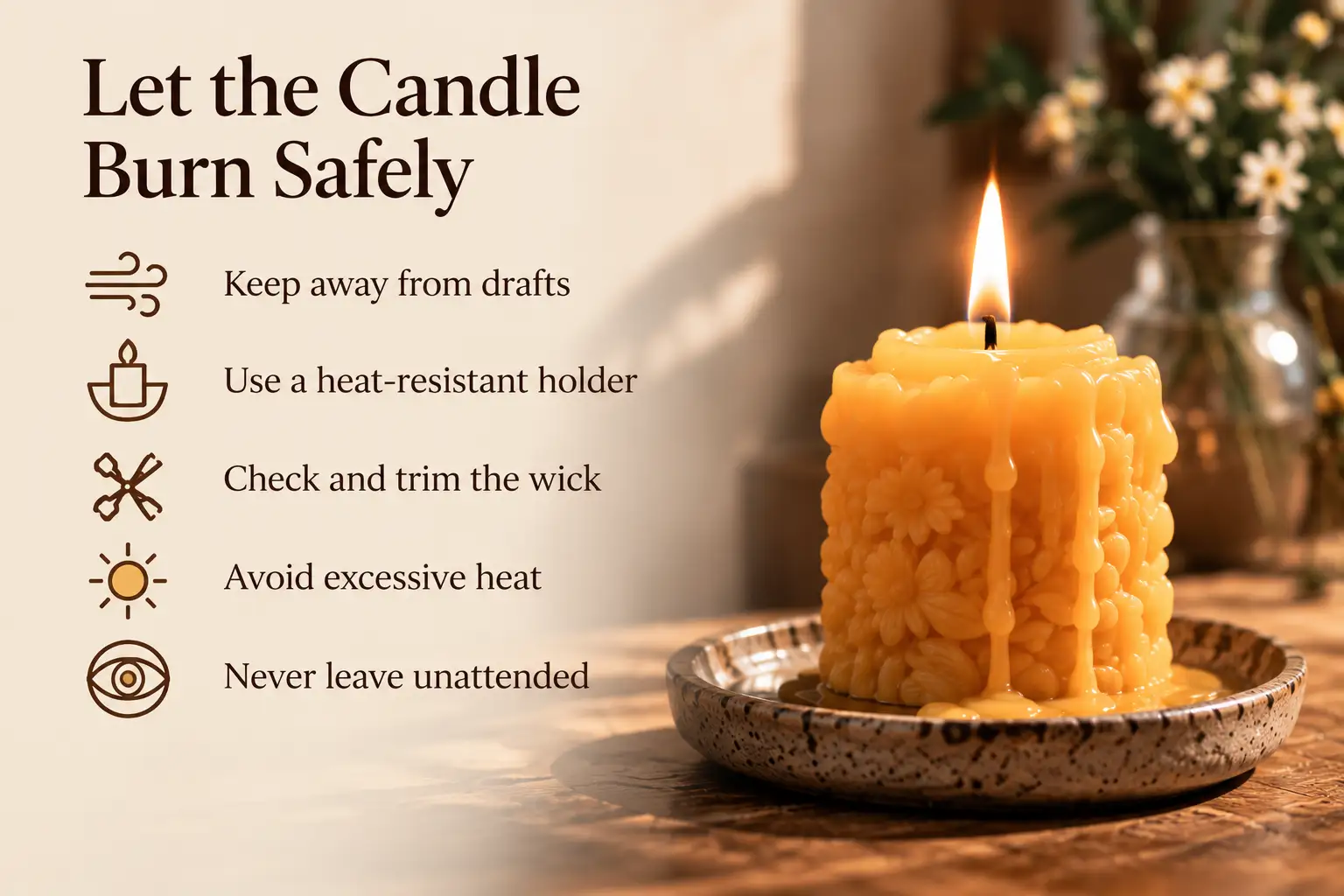
Let the Candle Burn Naturally—But Safely
You don't need to control every movement of melted wax.
Instead, create good conditions for the candle to burn.
Keep it away from drafts.
Maintain the wick.
Use an appropriate candle holder.
Keep it away from flammable materials.
And always keep a burning candle within sight.
As the flame continues, your beeswax candle will slowly change.
That's part of what makes a real candle different from an electric light.
It doesn't simply illuminate a room.
It transforms while giving you its light.
Keep reading

What Does Beeswax Smell Like? Understanding Its Natural Aroma
What does natural beeswax really smell like? Discover where its subtle aroma comes from, why it can vary from batch to batch, and why pure beeswax doesn't always smell strongly of honey.

How Long Do Beeswax Candles Burn? What Really Affects Burn Time
How long does a beeswax candle really burn? Explore the key factors that affect burn time, from candle size and wick choice to burning conditions and proper candle care.

Why Are Beeswax Candles Different Colors?
Why do pure beeswax candles vary from pale yellow to deep golden amber? Discover what causes these natural color differences and why they are part of the unique character of 100% pure beeswax.