Craftsmanship
Why Handmade Candles Are Never Exactly the Same
Small differences in color, texture, and finish are part of the beauty of handmade beeswax candles—each piece carries its own natural character.
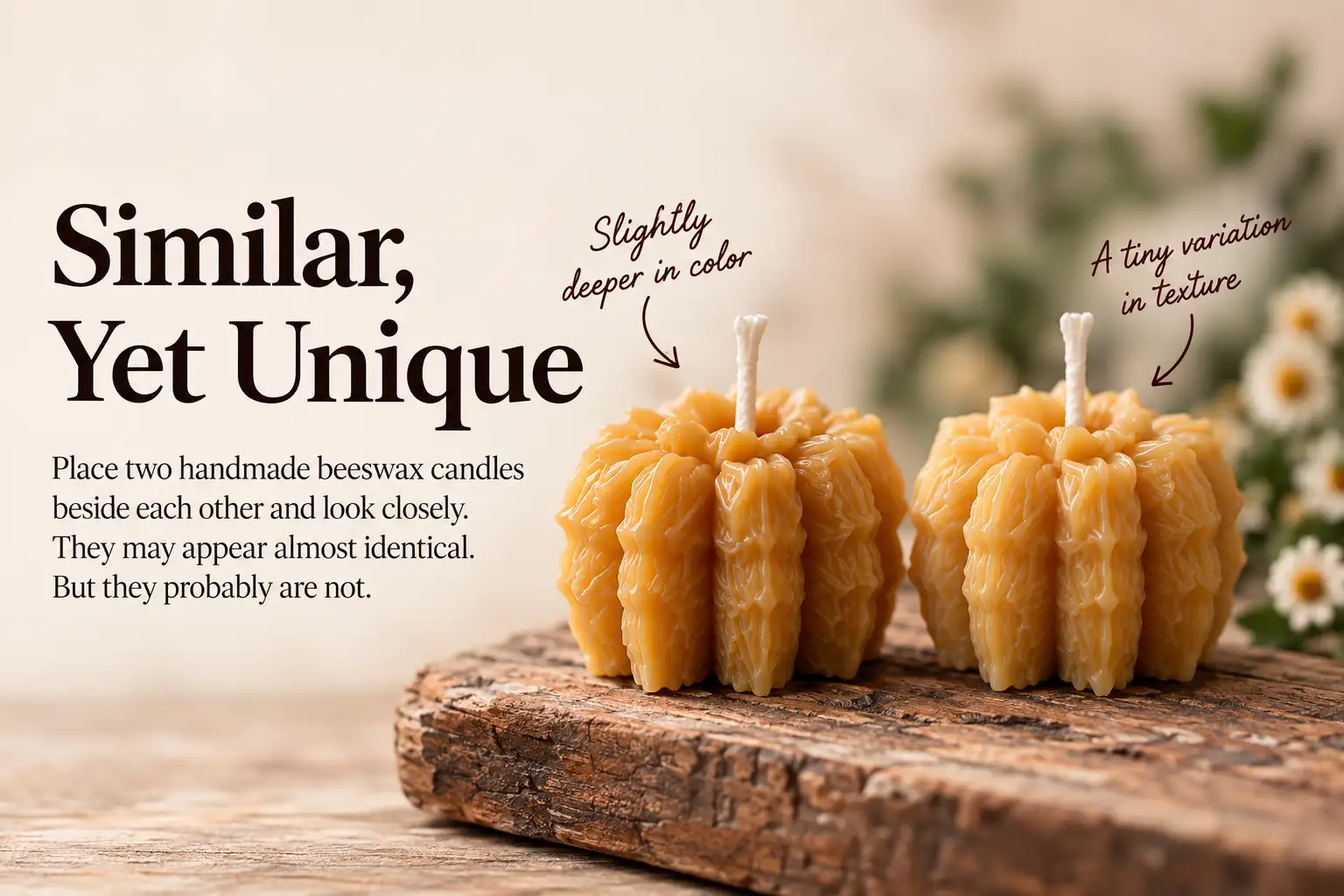
Place two handmade beeswax candles beside each other and look closely.
They may appear almost identical.
But they probably are not.
One may be slightly deeper in color. Another may show a tiny variation in texture. A small detail may catch the light differently.
For us, that is not a problem to eliminate.
It is evidence of how the candle was made.
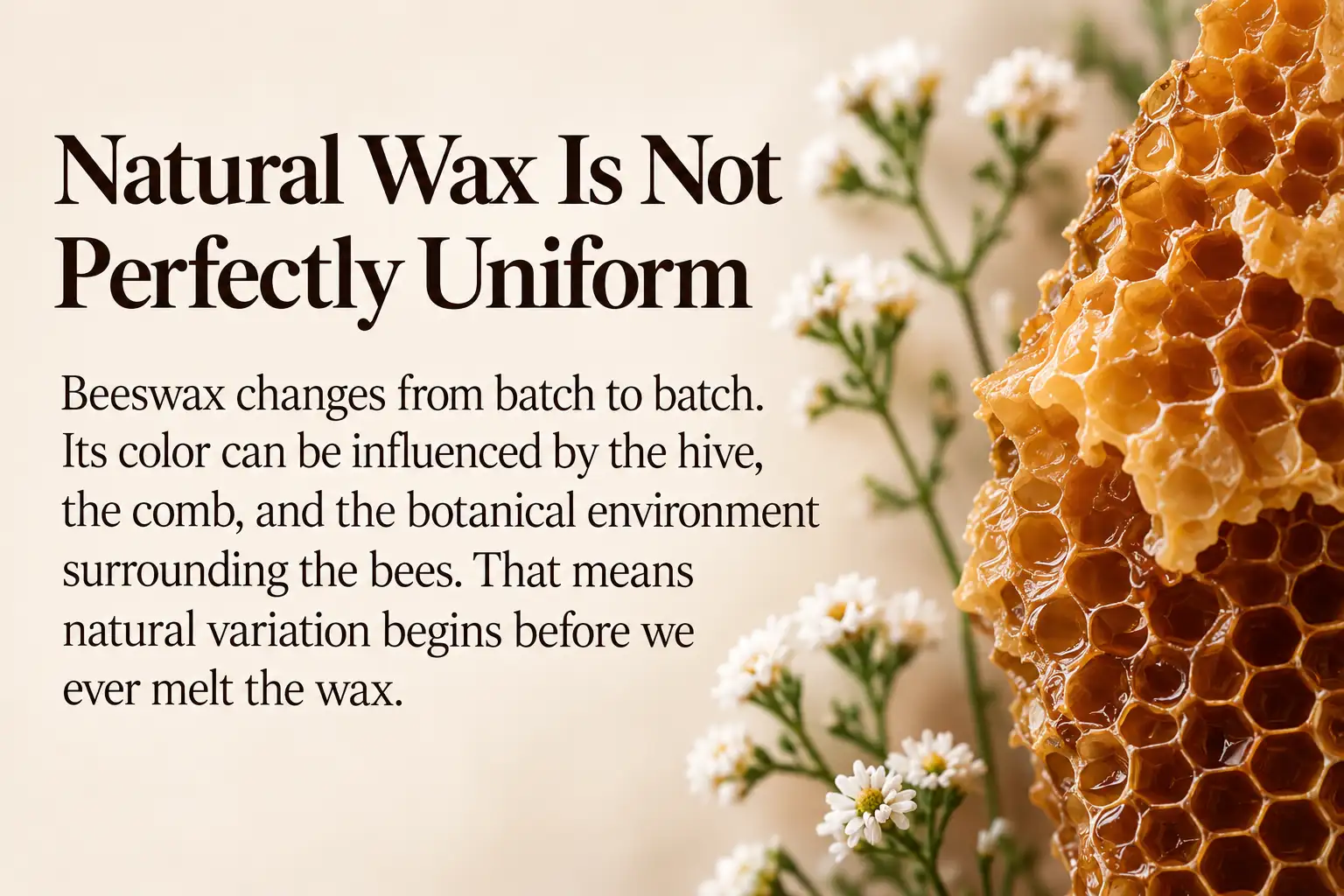
Natural Wax Is Not Perfectly Uniform
Beeswax changes from batch to batch.
Its color can be influenced by the hive, the comb, and the botanical environment surrounding the bees.
That means natural variation begins before we ever melt the wax.
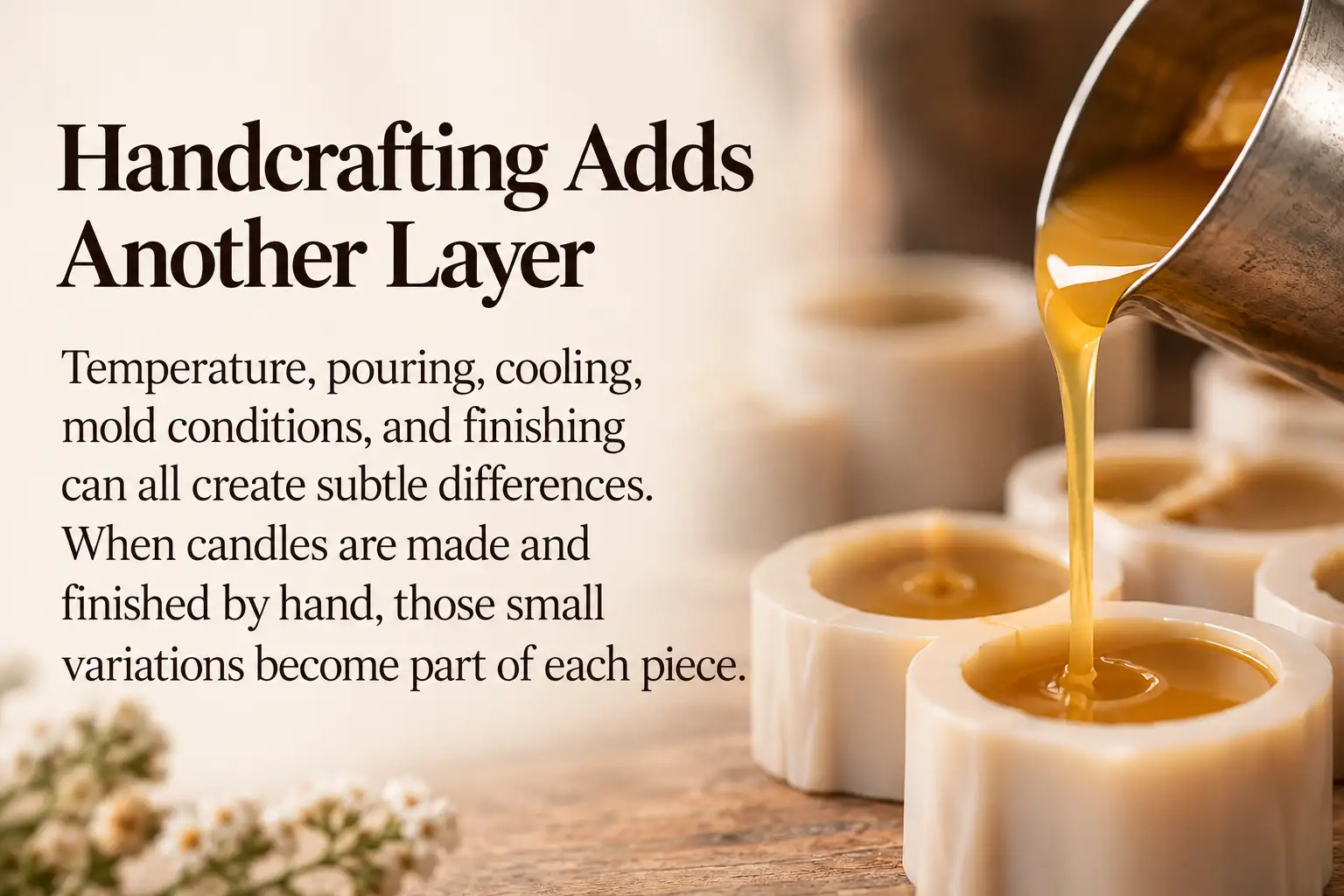
Handcrafting Adds Another Layer
Temperature, pouring, cooling, mold conditions, and finishing can all create subtle differences.
When candles are made and finished by hand, those small variations become part of each piece.
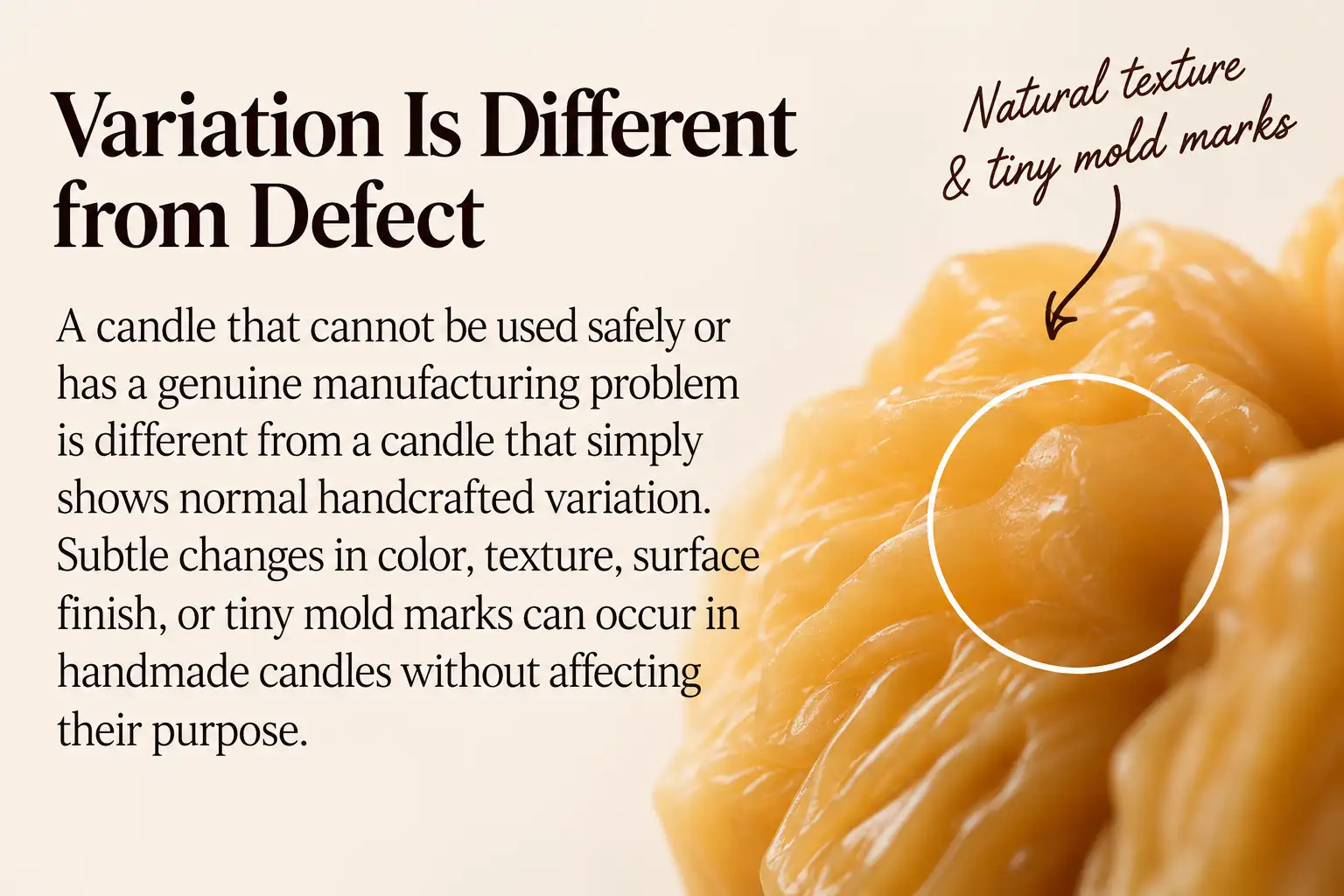
Variation Is Different from Defect
There is an important distinction.
A candle that cannot be used safely or has a genuine manufacturing problem is different from a candle that simply shows normal handcrafted variation.
Subtle changes in color, texture, surface finish, or tiny mold marks can occur in handmade candles without affecting their purpose.
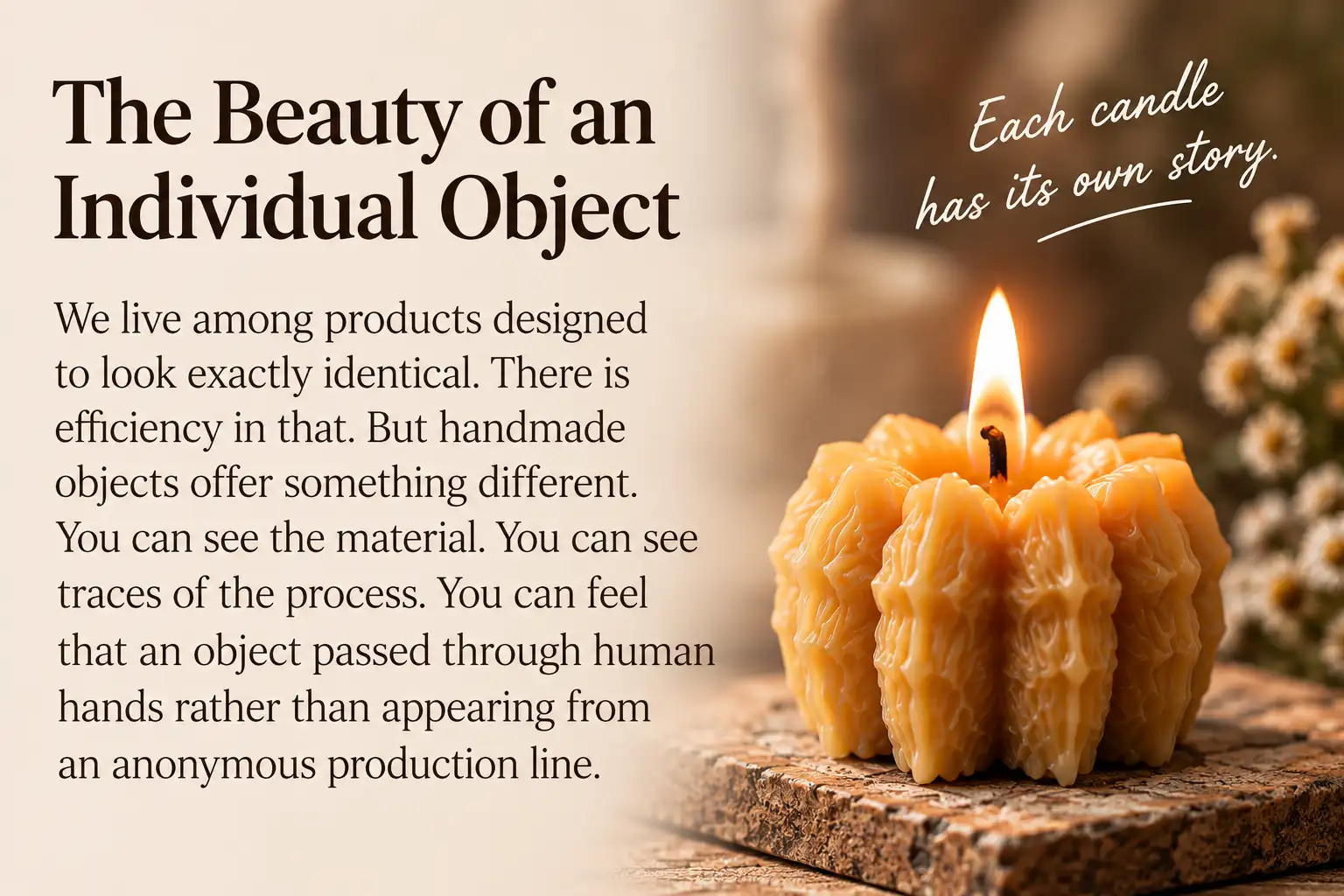
The Beauty of an Individual Object
We live among products designed to look exactly identical.
There is efficiency in that.
But handmade objects offer something different.
You can see the material.
You can see traces of the process.
You can feel that an object passed through human hands rather than appearing from an anonymous production line.

Your Candle Is Your Candle
The candle you receive may carry tiny details that belong only to that particular piece.
Once you light it, it changes again.
The top softens.
Wax moves.
The flame reshapes the candle hour by hour.
Perhaps that is part of the beauty of candles:
They were never meant to remain perfectly unchanged.
Keep reading
Why Do Beeswax Candles Drip Wax? Understanding the Natural Melt
Why does a beeswax candle sometimes drip while burning? Learn how flame, wick, airflow, candle shape, and burning conditions influence melting—and why a little flowing wax can be a natural part of the candle experience.
What Does Beeswax Smell Like? Understanding Its Natural Aroma
What does natural beeswax really smell like? Discover where its subtle aroma comes from, why it can vary from batch to batch, and why pure beeswax doesn't always smell strongly of honey.
How Long Do Beeswax Candles Burn? What Really Affects Burn Time
How long does a beeswax candle really burn? Explore the key factors that affect burn time, from candle size and wick choice to burning conditions and proper candle care.